Author: Chris & Tamara

  • 13Jun14

    13Jun14

    Every traveler should have tokens from home.

    Each time we’re moving on to another location, I do some backpack housekeeping. Part of the reason is to get rid of any miscellaneous things we’ve accumulated not on our packing list, like old receipts or throwing away the box the ibuprofen came in. But the other reason is because it’s nice to see our tokens from home — some practical and some sentimental.

    • Phrasebook from Chris’s former colleagues: Chris has gotten a lot of use out of this, especially the dictionary for his Spanish classes. It also has country-specific idioms/phrases.
    • Cards/letters from Chris’s parents, my mom, and Amabelle: These cards have a lot of love and encouragement, along with reminders to stick with it even if things get tough.
    • Letter from us, to us: Before we left, we wrote down the things that matter most to us and what we hope to get from this experience.
    • Refillable bottles from Robert: My friend Robert got us these refillable travel bottles, complete with suction cups and wide mouths for easy cleaning. Perfect for keeping our backpacks free of half-empty shampoo bottles.
    • Compass from Eric: Last but not least, the parting gift from my friend Eric that brings good luck and keeps us moving in the right direction, even when we’re not sure where we’re headed.

    Right now, the compass is pointing us north — back to Mexico. We enjoyed our time there so much that we want to explore more. After another week here in Costa Rica, we’ll be spending the next month in and around Tulum. That’s right: still beach and jungle, but this time with spicy food.

    With all the tokens we have, we find ourselves wishing we’d brought some tokens from home to give away to local people we’ve met.

    If we could start all over again, maybe we could have bought 30 Golden Gate Bridge refrigerator magnets or something. Not too heavy or extravagant, but a small token of thanks and something for others to remember us by.

    Oh well. Maybe we’ll remember for next time… See you in Monteverde!

  • 11Jun14

    11Jun14

    We don’t want to leave! This may sound unsurprising, but typically Chris and I are ready to mosey along after 3-4 weeks someplace. But for the first time since October, we don’t want to go.
    Don’t get me wrong: I can’t wait for some cooler weather up in the mountains in Monteverde. And I’m looking forward to one day not smelling of sunscreen and DEET. It would also be nice to not have to pay US$6 for peanut butter. And maaaaybe it freaks me out that we’re an hour away from a hospital. But there’s something about this place that really rubs off on you.

    Today we were headed toward the Natural Center, pictured above and below, which I sometimes think of as “Gringo HQ,” to get our bus tickets. But instead we bumped into lots of friends, old and new!
    Quick side note, two of our three favorite eateries in Sámara are at the Natural Center: a falafel place and a crepe place. The third is the soda, or diner, operated by the people who own our bungalow. I don’t think it has a name, but they serve delicious arroz con pollo and other dishes, and it’s across the street and a few doors down from Palí. Cindy and I hung out there the other night, and they make a delicious coffee with ice cream too!


    Falafel Samara


    Samara Natural Center 2


    OK, back to old and new friends. First, we passed by Lisa and Brookie‘s ice pop stand, and decided we must have an icy treat and a fun chat. Love those two!

    A while later while we were chatting, another couple stopped by with their daughter. Turns out, they’ve been living in Costa Rica for almost a year and a half! Originally from Pleasanton, not far from where I grew up outside of San Francisco, they took the plunge and decided to move here with their three kids. Now they’re about to head back and are trying to figure out how they can do a big overland trip as a family. SUPER. COOL.

    After we got our bus tickets and stopped for a crepe — made by a French expat who we chatted with about how much we all love cheese — we headed back along the beach. The view, it never gets old.


    Samara at Dusk


    Then, Chris spotted our friend Jose sitting along the rocks. We’re so glad we saw him, because he’d been in Nicaragua visiting family and also working on a construction project, he said, and we were worried we wouldn’t see him before we left. He’s such a nice guy, and he gave us his phone number and told us to call if we ever need anything.

    It was at about this time that we thought, well, we’re definitely coming back here. Because despite the heat and the bugs, the people are kind, the pace is tranquilo, and it’s incredible being surrounded by so much natural beauty. We leave Saturday morning; hopefully the time goes by slowly.


  • 09Jun14

    09Jun14

    Good morning, mosquitoes. You make us murderous. And scared.

    Do not underestimate these pesky bugs. We’ve tried lots of different tactics to keep mosquitoes at bay. One of the great things we have here are screens, which we didn’t have when we were in La Paz. I tried to take a photo of the cloud of ~20 mosquitoes hovering on the other side of our screen door, but they’re too small and my camera isn’t good enough. Just trust me: they’re there.

    The mosquito population has increased dramatically in the time we’ve been here in Sámara, due to the increasing amount of rain we’re getting as rainy season picks up. First thing in the morning and at dusk, the mosquitoes are especially active. And during the day, the (black and white-striped) aedes mosquito is out and biting. And those are the mofos that carry diseases like dengue fever. No thank you.

    In fact, mosquitoes are one of the world’s deadliest creatures, carrying diseases from malaria to yellow fever to West Nile virus. Don’t believe me? Check out this infographic from Bill Gates’s blog:


    BiggestKillers_final_v8_no-logo


    One of our Spanish teachers told us he’s had dengue fever three times in the past seven years or so. He said that here in Sámara, there aren’t as many cases, and it’s usually locals who get it. (Although, it could be that travelers are getting it, but the symptoms don’t show up until they get home.) But he said travelers are usually more vigilant about wearing repellent, and repellent is expensive.

    It’s true: a bottle of OFF! spray with 25 percent DEET is around US$10. We found a local brand with 20 percent DEET, but in a smaller bottle, that was around US$6. If you’re here for a month, one person can get by on one bottle. But if you live here and are outside a lot, the cost adds up.

    And it’s hard to be vigilant 24/7. We have a beautiful, shaded terrace to sit on. It’s sad to be sitting inside, but after sitting out there for five minutes, no amount of repellent can help you. Here’s what we’ve found helps us:

    • We’re serious about the DEET. We’ve used other “natural” repellents and they’re pointless. We prefer a higher concentration (at least 20 percent) so we don’t have to reapply every hour. If you can find a lotion, it provides better coverage.
    • Stay indoors during prime mosquito hours. We avoid going outside between 6-7am and 5-6pm if we can.
    • Don’t be afraid to be a little crazy. Our bungalow has a once-a-week cleaning service where a gal (this is her college job — she’s studying to be a social worker) replaces the sheets and towels. People here are accustomed to not having screens, so she leaves the screen doors open while she’s working, letting some mosquitoes in. The normal Tamara wouldn’t want to impose and wouldn’t say anything. But the mosquito-crazy Tamara specifically asks, “Por favor, puede dejar la puerta cerrada? Los mosquitos me pican mucho,” with a friendly smile.

    Anyhow, as much as we love it here, we’re looking forward to going someplace with fewer mosquitoes. Our next stop, Monteverde, is higher altitude and cooler, so it’s harder for mosquitoes to survive there. Thank goodness.


  • 06Jun14

    06Jun14

    Just horsed around today. Both did some work this morning, then hung out downtown. The horses above were also horsing around, and so were these two on the beach — until somebody started bothering them:


    Lastly, this mono (monkey) was making interesting sounds, so we got some audio for you. It’s capped off with a bird call at the end.


    This is our last week in Sámara! Next week we’ll be in Monteverde, checking out the cloud forest.

  • 05Jun14

    05Jun14

    We first met Lisa and Brookie a few days into our time here in Sámara, at the Friday afternoon farmer’s market. They were selling (delicious) popsicles under the name Pura Paleta, which literally translates as “pure ice pop” and is a fun play on the popular Tico phrase, pura vida.

    They have their umbrella, camping chairs and serious cooler set up across from Palí, the big grocery store in town. We asked them where they get their fruit, since some of the things they use are tougher to find, like albahaca (basil) and moras (blackberries). They said they found a vendor in Cartago, in the more temperate central valley approximately 4-5 hours away, that delivers fruit to them!


    Pura Paleta


    While the paletas were totally delicious and refreshing, the other treat was getting to talk with them more about their life here in Costa Rica. You see, Chris and I don’t often meet people who are around our age and living the expat life. Lisa had visited often, and Brookie was training English teachers. Originally from Georgia, they’ve been here three years.

    They told us about the ups and downs — missing the food at home, not missing the fast pace of life. The wild feeling of being in an empty house with nothing but an air mattress the night before leaving. And the “just do it” attitude it takes to make it all work. They totally inspired us. Maybe we’ll be them soon!

    We also had a fun time hanging out with our compañera de clase Briana yesterday, sharing some great conversation. We talked about our former/evolving lives in the US, differing world views — especially in light of the different reactions my LinkedIn post on career breaks was getting — and she taught us what neuro-linguistic programming is.

    We’ve met a lot of great people during our time here. After nine months, I think we’re finally figuring this whole thing out!

  • 03Jun14

    03Jun14

    This is Xinia — she teaches the cooking classes at our Spanish school. We saw her zoom past us the other day on the back of a moto while we were stopped on the side of the road gaping at a monkey balancing on telephone wire.

    We’re technically not students this week, but last week she told us we could come to cooking class anyway. Hurrah! Tonight’s recipe was empanadas con arroz y carne.

    Empanadas have been different in every country we’ve been to so far. Empanadas in Chile, for example, are on the larger side, typically oven-baked and filled with a mix of ground beef, onion, hard-boiled egg and olive. Empanadas in Argentina were smaller, but had more variety in fillings.

    Xinia made the dough, then got each of us to take turns kneading it. Afterwards, she rolled it out into a big log and cut it into 20 pieces that we flattened, filled and closed.


    Cooking Class Costa Rica 2


    Empanada


    Here’s how they looked after she fried them:


    Fried Empanadas


    See that bottle just to the right? That’s Salsa Lizano. It’s a typical Costa Rican condiment that tastes a little bit like a mix of hot sauce and Worcestershire sauce to me. It’s delicious! A lot of rice dishes are seasoned with it, and it made a great addition to our finished empanadas.


    Empanada filling


    We love, love, love taking cooking classes, and not just because we love food. Food is such an integral part of a culture and it’s a great way to learn about the way of life.

    After class, Xinia started cooking more beef and rice filling because she wanted to make some empanadas for the woman who comes to clean the school every night. We also said good-bye to some of our classmates who were leaving for other locations.

    One of the things we can’t wait to do when we get back is cook for our friends and family. We’ll start taking orders now.


  • 01Jun14

    01Jun14

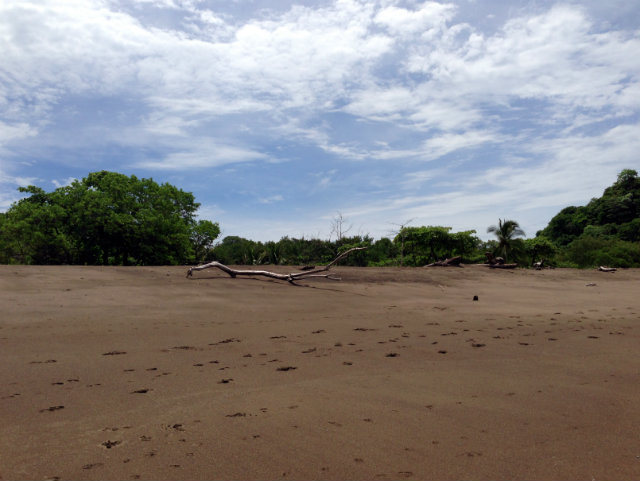
    In between Playa Barrigona and Playa Sámara is Playa Buena Vista, a beach typically only accessible during low tide and because its river-locked. The woman we’re renting our bungalow from, Cindy, took us there today to check it out.

    When we arrived, we started on the other side of this muddy river. Since it was raining pretty heavily this morning, it was deeper than usual, but only to about mid-thigh. We took off our shoes and got some mud between our toes.


    Rio Playa Buena Vista


    Up the river (to the left) live crocodiles, but Cindy said the crocodiles don’t come down this far. Phew. She said it’s so muddy and cold because it originates up in the mountains, then meets the ocean just to the right…


    Playa Buena Vista 1


    There were only two other people on the beach, and we took a walk while she told us about how most people don’t live near or even visit this beach because it’s difficult to access. She knows it well and likes to come visit because it’s quiet. By this point, the cool temperature from this morning’s rain has worn off and Chris and I are sweating like crazy.


    Playa Buena Vista 2


    The other thing this beach is known for is turtles! There are several species of sea turtles that lay their eggs here, most of which are endangered. Sometimes the causes are human-made, such as turtles eating plastic bags, being strangled with fishing nets, or being poached for their shells. Other times, it’s things like raccoons eating their eggs. About half way down the beach, we came across this turtle refuge.


    Turtle Refuge 1


    Turtle Refuge 2


    The volunteers live in the cabins behind the refuge. Every day, they watch for turtles laying eggs. Then, they go dig them up and bury them in this fenced off area.

    When the lizards would get close to the fence, a couple dogs would bark to scare them away!

    In the evenings, they check to see if any baby turtles have hatched and help them make their way into the ocean. Once they’re in the ocean, it’s up to them to survive. They estimate that only one out of every 100 do, both because of natural predators and human-made threats. We chatted with one of the workers, who said today is the first day of the breeding season, so soon all the space they have will be full.

    Afterwards, we took a nice (but also really hot!) walk along a jungle trail where Cindy pointed out different plants and little critters. We saw a really huge, full-sized crab wandering around, along with lots of lizards. Here she is being a hand model.


    Cangrejos


    She also showed us some trees that grow a type of almond, some cotton plants, and the seeds of this spiky plant — it looked a little like a dead venus flytrap — that people turn into jewelry or bead curtains.

    We still continue to be amazed by the nature that’s all around us and are realizing just how nature-poor our lives were, even living in a place like the San Francisco Bay Area with all its open space. At first I thought all the critters would creep me out, but they’re really not so bad. Except scorpions — those are always bad.


  • 31May14

    31May14

    This is Dennis from Café Diriá showing us what a coffee cereza (cherry) looks like throughout its six-month maturation. We’re coffee addicts and coffee is one of Costa Rica’s top agricultural exports (the other two are pineapple and bananas), so we took a coffee tour with two of our classmates.


    Coffee Tour Group


    Don’t laugh at my shorts. I haven’t owned shorts like this since I was eight years old, but they’re perfect for this hot weather. And they were the only ones I could find that didn’t have Costa Rica or pura vida written on the butt.

    The guy to our right is a French-speaking Canadian and the woman on the right is from Switzerland and speaks Romansh. She and her partner are going to travel Latin America for a year, but she came here early to learn Spanish. She came to Costa Rica not speaking a word of Spanish and is fully conversant after just five weeks! She has five more weeks in the school.

    The beneficio, which is the term used for a coffee processing plant, is located in Hojancha, about an hour from Sámara. But the coffee grows on fincas or estates that are located higher in the mountains since coffee grows best at higher altitudes.


    View outside Hojancha


    Cafe Diria Hojancha Front


    Coffee in Hojancha


    Right next door to the beneficio is a big grouping of spiny cedar trees. They’re grown for building.


    Spiny Cedar


    OK, back to coffee. I asked Dennis where Café Diriá got its name, and he said that Diriá was the name of an indigenous man who led locals in uprising against Christopher Columbus way back when.


    Coffee Tour Cafe Diria


    Because the coffee isn’t actually grown here, he took us to this demonstration area to show us the plants and the cerezas at different stages of growth. Costa Rica only grows one type of coffee: arabica. Why? It’s higher quality than other varieties, such as robusta. Since Costa Rica is a small country and can’t compete against countries like Brazil, Colombia, Vietnam or Ethiopia in terms of quantity, they instead compete on quality. In fact, the government issued a directive to all coffee producers to only grow arabica coffee in order to strengthen their position in the market.

    To process the coffee, there is a very long, multi-step process to prepare the beans and remove the many cáscaras or skins/peels. That’s what happens at the beneficio.


    Despulpador Cafe Diria


    Cafe Diria Hojancha


    There are also several processes to identify the highest quality beans. One involves actual taste-testing, and Dennis is a taste-tester. In order to be a taste-tester, you have to meet four requirements:

    • No drinking liquor
    • No eating chiles
    • No smoking
    • And a fourth one that neither of us can remember (!)

    Anyhow, the point is that you can’t do anything that alters your ability to taste. After the long process, this is what you end up with.


    Green coffee beans


    These are the beans in their pre-roasted form and they are exported this way. About 85 percent of the beans grown and processed in Costa Rica are exported — about half to the United States — and the other 15 percent stay within the country for domestic consumption.

    All in all, we learned a lot and have a lot more respect for what goes into making a cup of coffee! Oh, and of course we got to drink some coffee.

    We made it back to Sámara just in time to catch the sunset.


    Samara sunset 4


  • 28May14

    28May14

    My dad said he hasn’t been seeing enough of Holly on the blog, so here she is! No, we don’t normally hold her leash so tightly — only when we want to take photos because she won’t stand still. Here she is after her afternoon walk. Look at those eyes! She’s got the wild in her.

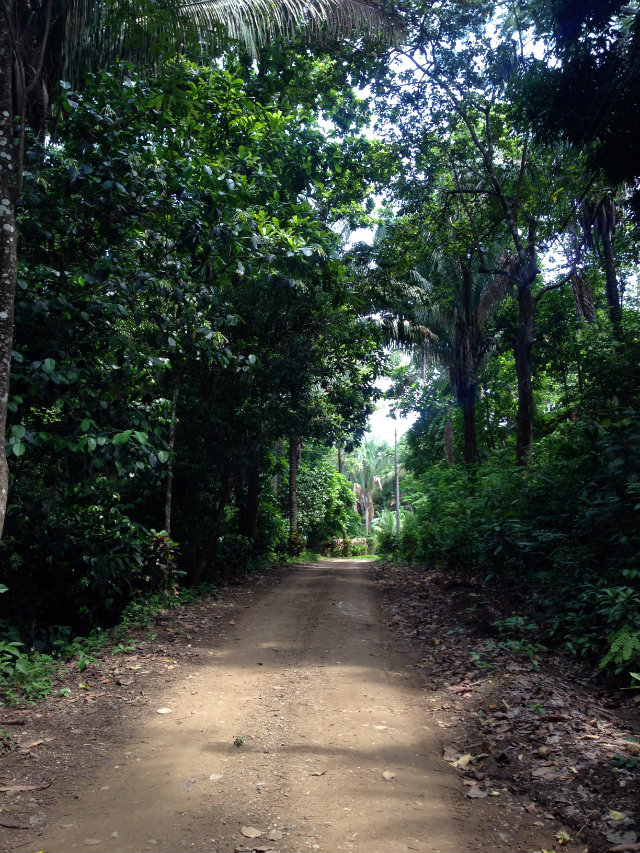
    We usually take her up and down this road that cuts through the jungle towards our bungalow.


    Jungle Road


    We usually see those little red and blue crabs skittering along the side of the road, and we sometimes hear monkeys in the trees.

    I think we’ve showed you plenty of photos of the beach, so we’ll show you some photos from our walk to school. Today we had class in the morning, but tomorrow we’ll have it in the afternoon. It alternates every other day so students are able to enjoy the beach and have some flexibility in their schedule.

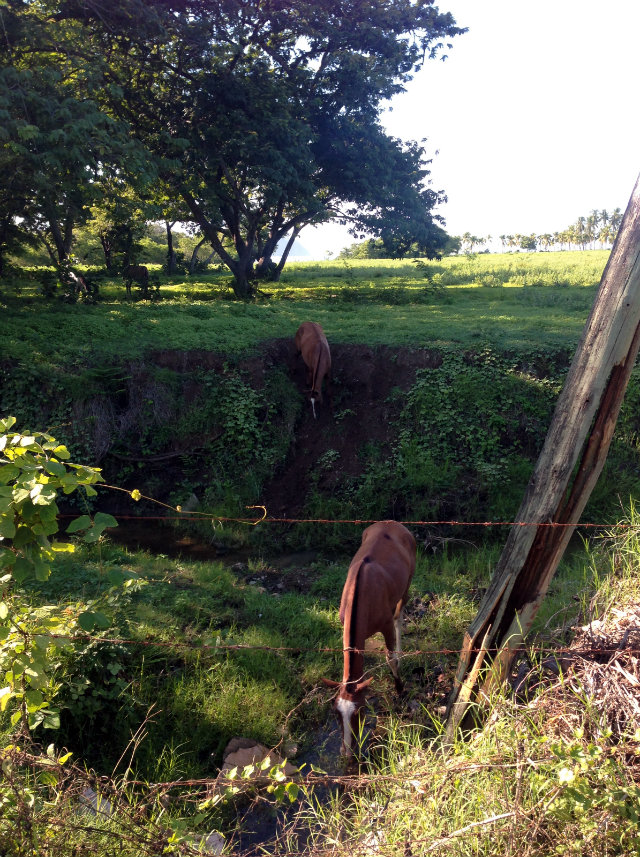
    We saw these horses eating during a stretch we call “no man’s land” because there is no shade and only fierce, unyielding sun. It took a lot of energy to stop to take this photo instead of continuing my journey to the shade.


    Roadside Horses


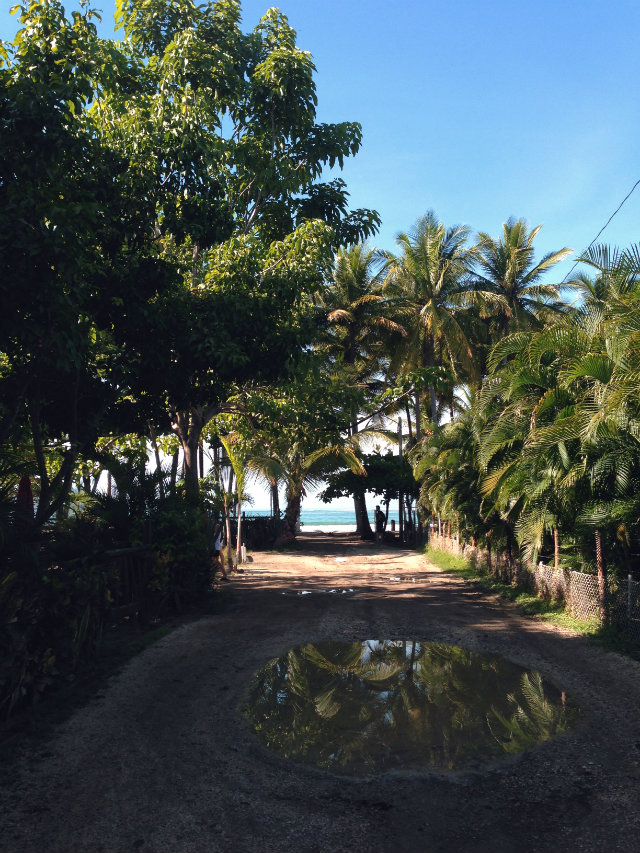
    After we get into the shade, we walk about five more minutes and hang a right down the street to the school. It’s a dirt road that passes by a couple hostels, and eventually ends at the ocean. The school is on the left.


    Road to Intercultura


    Every day during our walk, we can’t get over how beautiful everything is. Even Lonely Planet asks, “Is Sámara the black hole of happiness?” The answer is yes.

    To close us out, for your listening pleasure, we recorded the sound of this evening’s rain, recorded from our patio, for the next time you need to close your eyes and imagine you’re in la jungla. Disfruten.


  • 27May14

    27May14

    We are stuffed with patacones, flattened slices of green plantains that are then fried and topped with black beans and guacamole. We made them in a cooking class this afternoon. They were so tasty that I didn’t even think of you guys and take a photo. Sorry! But don’t worry, I did some Google Image searching and they looked a little bit like this.

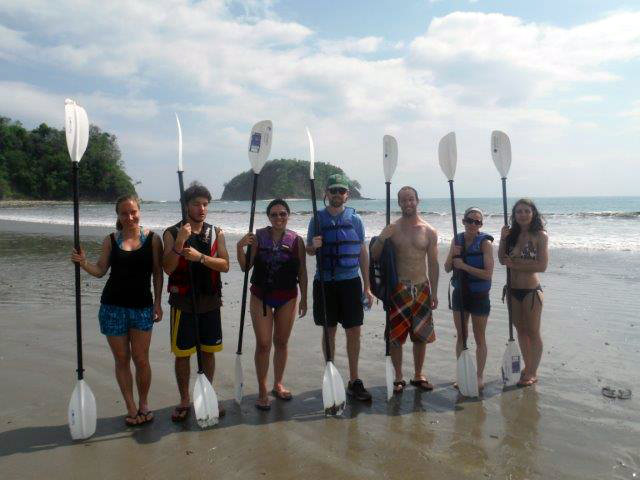
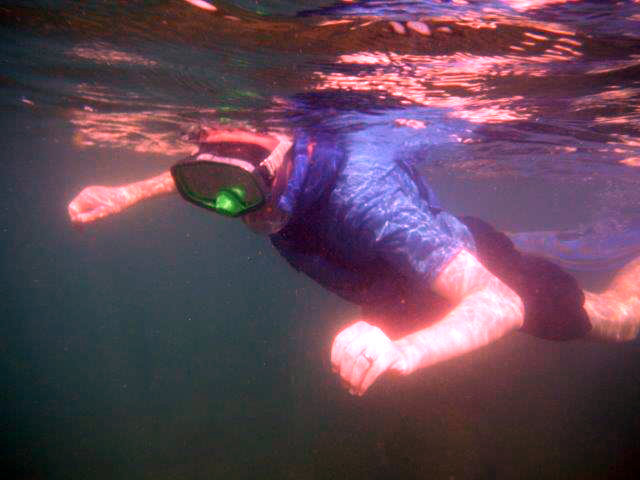
    Today we have photos from Friday’s kayak and snorkel adventure. We went with five other students from our school: three from the U.S., one from Germany, and one from Canada.


    DSCF2363


    Our guides had a waterproof camera, so we didn’t have to worry about taking photos ourselves! The guides were through a company called Carrillo Adventures which partners with our school, and they were very knowledgeable and fun. Chris and I got to commandeer the banana.

    In the southwest part of the inlet in Sámara, there’s a grouping of rocks that’s actually quite shallow and good for snorkeling. After a snorkel, the plan was continue by kayak to Isla Chora, a small island off the point that separates Playa Sámara from Playa Carrillo. (You can see it behind us in the photo above.)

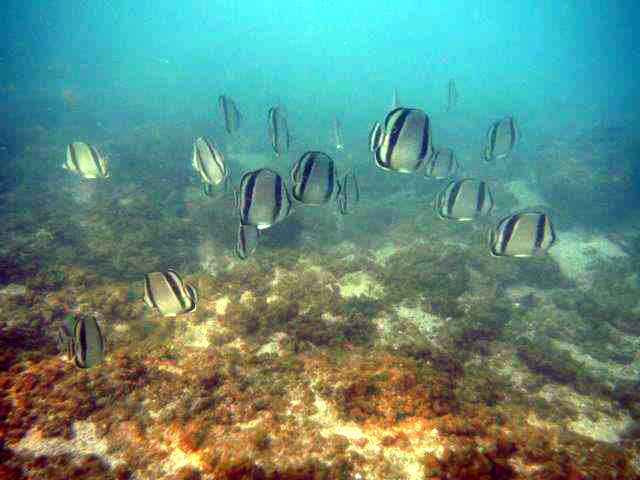
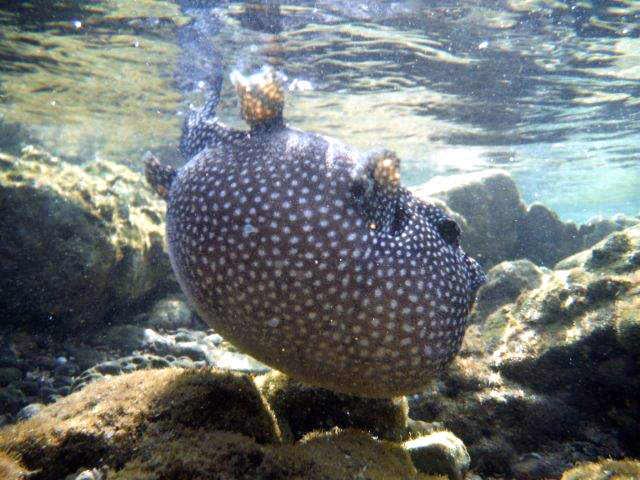
    While it wasn’t the best snorkeling ever, we did see some fun fish. Our guide even managed to catch a puffer fish with his bare hands. Who does that?!


    DSCF2387


    DSCF2383


    DSCF2391


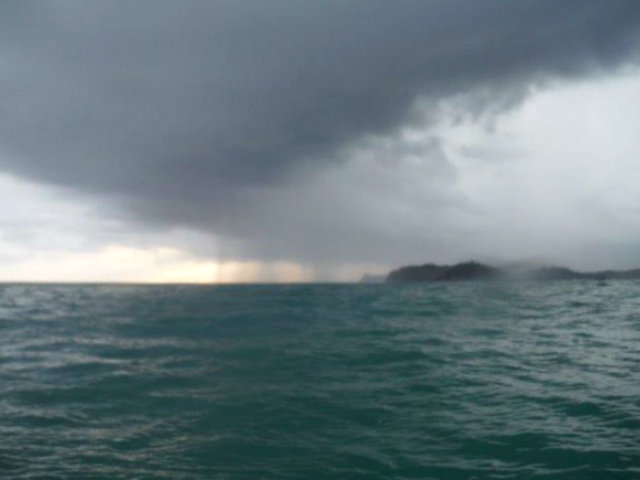
    On the way back, the skies turned stormy and we paddled back in the rain.


    DSCF2410


    In fact, it’s been increasingly rainy since we first got here, which is nice because it helps to cool things off. But only a little.

    Anyhow, chicos, we have to do our homework. Hasta luego…