Category: Dog Travel

  • 28Feb14

    28Feb14

    We’ve missed you! We’re now in Argentina. How can we fit all our updates in one post? Here are the highlights. You can click to learn more about each, or simply scroll down.


    We stayed with an Italian couple who built a house on one of the smaller islands off Chiloé, called Isla Lemuy. Probably the best way we could have ended our time in Chile. The island was quiet, the food was amazing, and we got to make pasta and try their homemade limoncello.


    El Castano


    Ferry to Isla Lemuy


    Cooking at El Castano Chiloe


    Chris Making Pasta


    Chiloé is known for its wooden churches, many of which are UNESCO World Heritage Sites. Isla Lemuy had several beautiful ones.


    Church on Chiloe


    Church on Chiloe 2


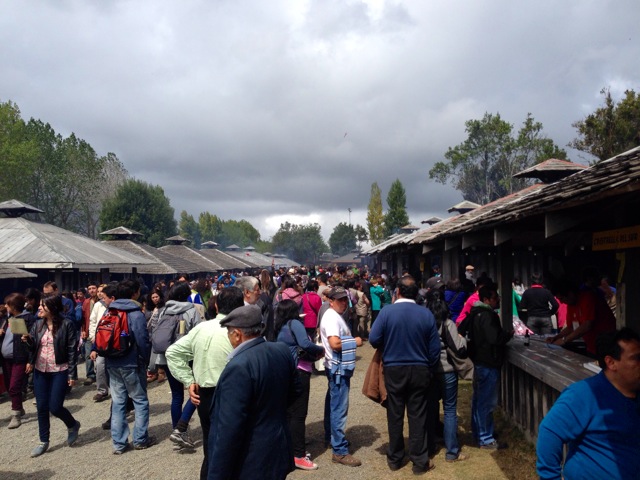
    We also happened to be in Chiloé during its big heritage festival, and got to experience some authentic Chilote (what people who live on Chiloé call themselves) cuisine. This side dish, called chochoca, is made of potato dough and chicharron, slow cooked on a log.


    Pork and Chochoca


    Making Chochoca


    Chochoca


    Fair in Castro Chiloe


    Fair in Castro Chiloe 2


    We also visited Chiloé National Park, which had great views, but wimpy day hikes.


    Chiloe National Park

    It’s a beautiful four-hour drive from Isla Lemuy back to the city of Puerto Montt, which includes two car ferries. So we left at 7:30am to drop off our rental car, then catch a taxi to the bus terminal.

    The bus ride from Puerto Montt to Bariloche was absolutely beautiful, winding through the Andes and through Nahuel Huapi National Park. I didn’t take any photos because it was too difficult while we were moving and we just wanted to soak in the experience. It’s the most beautiful bus ride we’ve ever taken.

    Which took an abrupt turn when Holly got stopped at the border.

    Let me rewind. We don’t sneak Holly on buses — but we do practice a sort of don’t ask, don’t tell policy. When we saw another woman get on the bus with her cat in a crate, we breathed a sigh of relief. But then, a few miles away from the border, the bus stopped and at first ONLY she got off after being waved out by the bus driver.

    After some quick weighing of pros and cons, Chris and I let the bus driver know that whatever that lady was doing we needed to do because we also had a pet with us. He fortunately wasn’t too unhappy about it, but he wasn’t happy either. He then informed us that we were stopped because Chilean immigration needed to put exit stamps in everyone’s passports and the lady with the cat was a police officer who worked there; she wasn’t doing anything to prepare to bring her cat across the border. Oops.

    So the bus keeps going and eventually we cross into Argentina and stop at immigration and customs, but not before the bus driver stops and gives some snacks to a stranded hitchhiker. Nice guy. We clear immigration just fine and the bus driver flags down a guy from SENASA, Argentina’s USDA-equivalent, who looks like Gael García Bernal but with lighter hair.

    He took one look at our paperwork and said, “I can’t let her through.”

    We broke our own rule about not trusting local veterinarians about requirements for international dog travel. But this vet was in a tourist town, Puerto Varas, close to the Argentine border. So when he said all we needed was a signed health certificate from him, we took him at his word. “It’s easy — much easier than getting into Chile,” he said. But Gael García Bernal lookalike said we needed an official certificate from the Chilean government.

    We took a deep breath, tried not to freak out, and walked him through all the documentation we had for her vaccinations. We had all the proper documentation except the official certificate from Chile saying that the Chilean government says we have the proper documentation. He started nodding his head and, after a nudge from one of his colleagues who said something that sounded like “oh, come on” in Spanish, he let us through. Everyone gave Holly a little scratch on the head. Phew. Lesson learned.

    When we arrived in San Carlos de Bariloche, usually just referred to as Bariloche, it was already past 10:00pm and very dark. So you can imagine we were happy to see this in the morning.


    Sunrise in Bariloche Argentina


    Bariloche sits right on Lake Nahuel Huapi and is home to outdoor activities galore in summer and winter. We thought it would be a great place to find an apartment/room/cottage for a month to explore the outdoors and focus on our projects again after three weeks of being constantly on the move. (And, quite frankly, spending more money than we’d anticipated. Staying in one place equals savings.)

    Our amazing Airbnb host showed us a couple different places she had available for the month. While on the drive, she told us about Bariloche and how it’s seen a lot of growth recently, but the growth wasn’t well-regulated. As a result, it’s feeling less and less like a quaint mountain town — which is why everyone loves it — and big condo buildings are popping up.

    She also told us about her work, aside from her interior design business, to help people in Bariloche alto, the neighborhoods up in the hills. While the lower part of Bariloche along the lake is a thriving tourist community, the people in the hills are really struggling. In many ways, it’s the same old story of poverty: lack of education, poor health, violence. I told her that there are many communities in the US that struggle with poverty too. She mentioned that a lot of people just donate clothing and then think that’s all they have to do. What I didn’t say is that I think a lot of people just donate clothing because they don’t know what else they can do. It’s one of the reasons I think I got burned out on social-change work: it all felt so intangible.

    In the end, we’ve decided that Bariloche, while beautiful, is a little bit too touristy for us. Tomorrow, we’re hopping on a bus to San Martín de los Andes. It’s about four hours north of here and much smaller, so fingers crossed. See you there.


  • 19Feb14

    19Feb14

    Holly loves road trips! Here she is in front of Lago Llanquihue and Volcán Osorno. For the Californians reading this, Lago Llanquihue is about twice the size of Lake Tahoe. It’s situated in northern Patagonia in the Lakes Region. If you look at a map, you’ll see there are a number of other very large lakes nearby. We’re staying in Puerto Varas, on the south end of the lake, which is near where our friend Eduardo from Viña del Mar was born.

    There is a very scenic drive all the way around Lago Llanquihue, so we decided to make a day of it. It’s very easy to navigate because there are green signs that keep you moving in the right direction at all times. And, if all else fails, drive towards the lake! Factoring in little detours and a stop to eat, it takes about five or six hours. But, we didn’t take the turn off to the national park since we’re saving that for another day, which would add a couple more hours.

    In some areas, the lake looks a lot like the ocean. We came across a number of spots where people were sunbathing and taking a dip in the waves. Here’s a more secluded spot we found near Las Cascadas.


    Lago Llanquihue Las Cascadas


    We stopped at a little house along the way that serves onces alemán, which translates to German “elevenses,” or high tea. We thought we were going to get a coffee and a small pastry. But noooo…


    Tante Valy


    Onces Aleman


    Onces Aleman 2


    We ended up with coffees, rolls, salame and cheese, jams, salmon, eggs, chicken, and a slice of kuchen AND cake for each person. Needless to say, we couldn’t eat it all. But don’t worry — the cakes are in the fridge for later.

    During our drive, we also made the decision not to go further south after our next stop in Chiloé. It was a tough decision, but this month of hopping all throughout Chile hasn’t been cheap and is, quite frankly, exhausting. Flights to Punta Arenas are expensive (and not very dog-friendly), and bus trips are long and difficult — 22 hours weaving through the mountains. We’re ready to find another place to stop for a good month or so, so we’re working on figuring that out. We’re thinking it might be time to cross over to Argentina.

    In the meantime, we’ll continue to enjoy the views here in Puerto Varas. Here are a few more from the drive, including a shot of our favorite backseat driver.


    Road by Lago Llanquihue


    Volcan Osorno


    Backseat Holly


  • 01Jan14

    01Jan14

    ¡Feliz año nuevo! Tomorrow, we fly to Santiago.

    To bid adios to the first country in our leap year, we said farewell with tacos al pastor. Also, our Airbnb host Rodrigo stopped by with a gift of tequila and mezcal.

    We’ll spend one week in Santiago before hopping on a bus to Viña del Mar, just north of Valparaíso. Our plan is to stay for a month, and from there we’re considering renting a car and visiting places up and down Chile. It’s summer there now, so the weather will be in the mid to high 80s.

    Silver Linings Playbook and Step Brothers are queued up on our laptops, and we’ve got books downloaded onto our phones. And Holly’s got her calming treats. This is going to be a long flight for her, so we’ll see how it goes… Our flight stops over in Panama for an hour and a half, and we’ll arrive in Santiago at 5:45am local time.

    See you then!

  • 30Dec13

    30Dec13

    Have I mentioned that it’s stressful to bring pets across international borders? Well, it is. Today we got (almost) all the documentation we needed to bring Holly from Mexico to Chile. I say almost because we still have one more step.

    For the sake of posterity and any other person who wants to travel with their dog, here’s how to get a pet export certificate or pet health certificate in Mexico. One day I’ll write up how we got one in the U.S. too.

    / BACKGROUND / Any time you are traveling with your pet internationally — versus traveling domestically — there are special requirements. Each country has its own requirements, which may vary based on the country you’re originating from. However, most countries require some kind of official “health certificate” or “export certificate” from a government agency.

    / GETTING STARTED: WHICH AGENCIES WILL I DEAL WITH? / The first thing you should do is determine the name of the government agency you’ll be dealing with in both your country of origin and destination country. It’s usually the equivalent of the USDA, because the whole point of restricting animal importation is to protect a country’s food and livestock from harmful diseases.

    • In Mexico, the agency is SAGARPA, which is the Department of Agriculture, Livestock, Rural Development, Fisheries and Food. It has a sub-department that you will deal with primarily called SENASICA, which is the National Agro-Food Health, Safety and Quality Service.
    • In Chile, the agency is SAG, which is the Agriculture and Livestock Service.

    If you’re having trouble figuring out the agency at your destination, I recommend calling the consulate of your destination country. They may be able to offer you additional guidance, but do not trust consular workers to be up-to-date on pet travel requirements. You should get those directly from the agency. For your country of origin, just ask a local vet.

    / FIND YOUR DESTINATION COUNTRY’S REQUIREMENTS / Once you know the appropriate agency in the destination country, browse their website to find out what they specifically require. Here are the requirements to bring a dog to Chile, as of today:

    • A health certificate, in Spanish, issued by the official health authority of the country of origin that is no older than 10 calendar days.
    • The certificate must show that the pet:
      • Underwent a clinical exam by a veterinarian 10 days prior to shipment and was recognized as free of communicable and parasitic infections
      • Was vaccinated against rabies at least one month but less than 12 months prior to shipment (or was tested for rabies antibodies 3-24 months before the trip)
      • Received an internal and external antiparasitic treatment within 30 days prior to shipment, including naming the active ingredient, dosage and application date
    • The certificate must also include the name of the owner, additional background on any treatments the pet received, and the address where you will stay in Chile.
    • There is no cost to import pets.

    Be on the lookout for any special requirements for your country of origin. For example, some requirements may be more strict if you’re coming from a country that has different infectious diseases. Or, if you’re coming from a country close by, requirements might be more lax.

    Some countries, or smaller airports, may only have inspectors on hand on certain days or during certain hours. Sure, immigration and customs might be open, but there is usually a special inspector who deals specifically with animals. Since we were considering booking a flight to Santiago that arrives at 5:40am, I contacted SAG to make sure they would have inspectors on hand.

    / FIND YOUR ORIGIN COUNTRY’S PROCEDURE / Local vets are a good resource here. They may not know everything, but they can help point you in the right direction. For example, notice how Chile says “health certificate?” Well, the vet here in Mexico told us that SAGARPA/SENASICA call it an “export certificate,” or certificado de exportación.

    Unlike in the U.S., run-of-the-mill vets in Mexico don’t have access to official government forms. Rather, vets help you with your documentation, and then you pay a visit to SAGARPA/SENASICA in person with your documents to obtain your certificate. In Mexico City, that means going to the SENASICA public service window at the airport. I called their office to find out what they needed and confirmed that we only needed to bring our paperwork — not the dog. They will need to see the dog eventually though; more on that later.

    / PLAN AHEAD, BUT NOT TOO FAR AHEAD / So, you probably noticed based on Chile’s requirements that you can’t do this on a whim. Same with most countries: you typically have to have most vaccinations complete a minimum of 30 days before you leave. So make sure you get all the vaccinations you need ahead of time. Why? Like in humans, it takes a little while for vaccines to take effect in animals.

    However, don’t be too much of an early bird. Some paperwork has a firm expiration date. For example, a health certificate from a vet in Mexico is only good for five calendar days, meaning SAGARPA/SENASICA won’t give you your export certificate if the paperwork from your vet is expired. And the export certificate you obtain from SAGARPA/SENASICA can only be a maximum of 10 days old when you arrive in Chile. So, plan accordingly when scheduling vet visits and going to get your export certificate. Why the last-minute nature? An animal’s health can change quickly and there has to be a set window in which health results are considered valid.

    / TAKE YOUR DOG TO THE VET / When taking your dog to the vet to get their health certificate, DO NOT assume your vet will know a) what you need in order to get your export certificate in your origin country, or b) what your destination country’s requirements are. If you just ask them for a health certificate, they give the dog a brief physical exam and write up something on their letterhead saying the dog is healthy and disease-free, as well as confirm basic characteristics such as age, color, breed, weight, etc. That’s fine, but insufficient.

    Instead, bring your destination country’s requirements with you! For example, our vet gave us documentation specifically noting that Holly is free of parasites and that she has received internal and external antiparasitic treatment. We had to go back a second time for the latter, since we thought it would be sufficient to bring the pills with us to SAGARPA/SENASICA. Do not make this mistake. Unless it’s signed by a vet, government agencies won’t accept it. Lastly, we already had documentation from our vet in the U.S. of her rabies and other vaccinations.

    Depending on what the vet has to do, you can expect the exam and health certificate to cost approximately 300 pesos.

    / PAY A VISIT TO SAGARPA/SENASICA / Armed with our documentation, we took the metro to the airport. We ended up having to make two trips because we were missing the internal and external antiparasitic treatment documentation I mentioned above. On our second trip, we almost got sent away again because it was the last day our vet’s health certificate was valid and our trip isn’t for another couple days. It took a combination of pleading and assertiveness to get them to understand that, while the health certificate from our vet would be expired in Mexico before our trip, the exportation certificate would still be valid in Mexico and both would be valid in Chile.

    Then, there was some difficulty which our vaccination documentation because it was in English and not on a “carnet de salud,” or health card, which is what vets traditionally provide in Mexico. Basically, it’s a booklet with a pet’s vaccination and health records all in one place. Our documentation was in the form of an invoice from our vet, which listed the vaccinations received, the dates, Holly’s patient information, the cost, and included the vet’s signature.

    But the man told me that the information needed to be in a carnet de salud and that he could not accept this, even though it specifically said Holly got a rabies vaccination on September 7. I pointed this out to him and he told me that it didn’t have the signature of the vet who gave us our health certificate. I pointed to the signature from the vet in the U.S. who gave the vaccination. He finally acquiesced. Remember, bureaucracies are the same all around the world. Be patient and assertive.

    We handed over copies of all of our documentation and walked away with our export certificate. We celebrated with coffee and Cinnabon at the airport. We just have to bring Holly in person before our flight — so we have to arrive even earlier — for a final check and another signature on the certificate before we can leave.

    The flyer on the wall said that export certificates cost 421 pesos, but we were not charged anything. However, it’s possible we’ll have to pay that when we come back for the second signature.

    / OTHER TIPS / Here are a few additional tips:

    • It really helps to know some Spanish. My Spanish has improved wildly since being in Mexico, and I was able to have fairly complex conversations with both vets and government officials, in person and by phone. If your Spanish isn’t that good, make sure to ask people to speak slowly and repeat back what you think you heard them say to make sure there are no miscommunications.
    • Make copies. Make two or three copies of all your documentation, and never give away your originals. Do not expect government agencies to make copies for you — they will send you somewhere where you can pay to make them yourself.
    • Don’t assume. It’s up to you to know what the requirements are and make sure you have what you need. Ask lots of questions. Tell people exactly what you’re going to do and ask them if they see any problems; don’t expect them to offer the information proactively.
    • Check your airline’s requirements too. Chances are, if you’re meeting your destination country’s requirements, you’ll be fine with your airline. But check with them too in case they have any special requirements before allowing you and your pet to board.
    • Be your own advocate. If you’re not getting what you need, show documentation and ask again. If you’re not confident you’re getting the right information, get a second opinion. You have to be assertive!

    Oh, the things we do for this girl. We love you, Holly.

  • 13Dec13

    13Dec13

    Tacos al pastor are our favorite. They’re cheap and they’re everywhere. We just got back from stuffing our face with some.


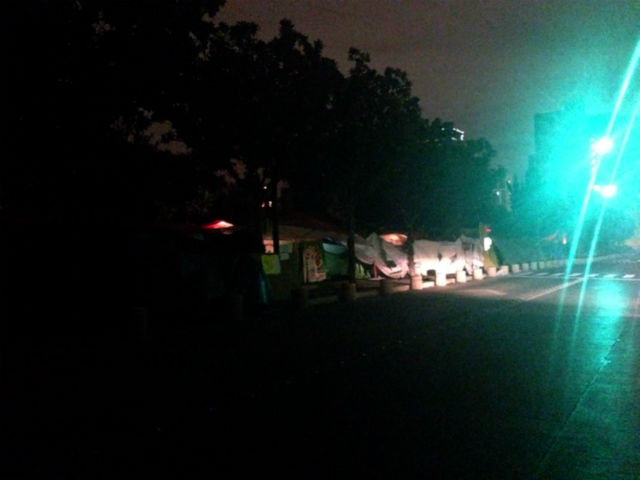
    Teachers union strike Mexico City


    This encampment is in downtown Mexico City — and it’s filled with teachers protesting attempts to overhaul the education system. We drove by last night during an impromptu tour from Chris’s mom’s friend’s cousin and her husband. (But not a former roommate.)

    We’re finishing up our arrangements for our next stop beginning in January: Chile. We’ll stay a few days in Santiago before spending a month (or maybe more) in Valparaiso.

    I had a question about regulations for bringing our dog to Chile because our flight will arrive at 5 a.m. and, while customs is usually open 24/7 at airports, the agriculture departments (think USDA equivalents) in other countries don’t always have the same hours. But to make sure that wasn’t a problem, all I could find was a general government email address. I thought, Oh great — I love sending emails into black holes. 

    And then they emailed me back with everything I needed…THE EXACT SAME DAY. They even sent me an attachment with all of the most up-to-date requirements. #ChileFTW

  • 28Nov13

    28Nov13

    Together with other gringos, we flocked to a restaurant to celebrate Thanksgiving. (I mean, look at us: there’s a painting of the Statue of Liberty in the background.) We went to Big Joe’s and he did not disappoint with his menu. What are we thankful for, you ask?

    – Our health
    – The ability to take a Leap Year
    – The people in our lives (a.k.a. YOU!)

    We fly to Mexico City on Saturday afternoon. Yesterday we took Holly to get another health certificate at the vet. She didn’t need a formal government form this time since we’re only traveling within the country and she won’t go through customs. She just needed something on a vet’s letterhead saying she is healthy and has had all her shots to give the airline.

    We would have used the one we got in the U.S., but the certificate is only valid 30 days. Still, it’s good we kept a copy separate from the original we gave to the customs official because the vet found it useful to review. Always have copies!

    We’ll stay in an Airbnb for a few days until we find a longer-term place. We found out from the guy that they’ll be using the old colonial house for a video shoot during part of our stay. Should be interesting! He said there’ll be buffets there for the crew that we’re welcome to. #score

  • 08Oct13

    08Oct13

    Toto, I’ve got a feeling we’re not in Kansas anymore! (more…)

  • 26Sep13

    26Sep13

    How does one lure a dog into a small, dark space? (more…)

  • 07Sep13

    07Sep13

    In exactly one month, our leap year will begin! Today we pumped Holly full of vaccinations, then went wine tasting.  (more…)

  • 25Aug13

    25Aug13

    Tamara has scoured websites and called vets and government agencies for clear guidance on international dog travel.

    (more…)