Blog

  • 07Mar14

    07Mar14

    This is the view from the hike we took the other day. It’s what Lago Lácar looks like once you get around the bend that makes it look small from San Martín de los Andes. Sometimes I think we take views like this for granted since we’ve seen a lot of beautiful landscapes in our travels.

    Which got us thinking about other random things we often took for granted that are more obvious to us now:

    • Customer service. It’s just different. Don’t get me wrong, there have been a lot of very friendly, helpful people in various businesses who we’ve come across. But on the whole, whether it’s buying bus tickets or paying for produce, the vibe is, “I’m doing you a favor by being here,” rather than, “How can I help you?”
    • 911 and other simplified telecommunications. Not every country has a centralized number for emergencies. In Chile, there was a separate number for police, fire and medical. In addition, we’ve found that in both Chile and Argentina, calling phones is tricky! For example, if you’re calling a land line from a cell phone in Chile, you have to insert a 9 between the area code and phone number. Everyone just knows to do that. Or if you’re calling a cell phone in Argentina you have to drop the digits “15” and add the area code. (I think. We still haven’t figured it out.)
    • Change. Back in La Paz, Mexico and here in Argentina, change is precious. ATMs dish out large bills, but very few places can reliably break them. Cashiers are often asking you for coins or small bills because the drawer literally won’t have any.
    • Clean drinking water. So far, in South America, we’ve been close to the Andes which means clean tap water. In Mexico, we had to go bottled because, while the water may be OK in some places, the pipes weren’t.
    • Maintenance. A sink barely hanging on to a wall. Walls in desperate need of fresh paint. Giant holes in sidewalks. There’s also a lot of trash on beaches and the side of the road. At first I thought it was laid-back and refreshingly imperfect. Now it just feels like no one cares. It’s probably a question of budget priorities, both for governments and individuals.

    None of these are life-changingly problematic — except maybe 911 — just things you notice when they aren’t there. And in the spirit of balance, here are five other things we notice that we’d like to see more of in the US.

    • No rushing people out of restaurants/cafes. You can take your time. Drink your coffee. If there’s a shift change, someone will politely ask you to pay, but otherwise no one shoves the check in your face.
    • Reliable, comfortable bus systems. Although trains would be way better, the buses go everywhere and they’re cheap. And you just have to show up 15 minutes before it leaves — not 1.5 hours.
    • Big, long lunches. There’s no rush. And it’s better to eat a big lunch than a huge, heavy dinner right before bed.
    • Patience. I haven’t come across any impatient people. The only impatient people are us. I frequently find myself thinking, Why is everyone walking so slow? They are probably thinking, Why is this woman in such a rush?
    • Entrepreneurship. Many people we meet have more than one job, including one they created for themselves. I find that inspirational. Yes, there are entrepreneurs in the US. But many of the people in my generation just think about what company to work for, not how they can build something themselves.
  • 04Mar14

    04Mar14

    It’s Travel Tip Tuesday. But first, HAPPY BIRTHDAY to Chris’s mom!!! She’s coming to visit us in Buenos Aires in April; we’re excited to have our first visitor.

    Today’s travel tip has to do with a project we’re currently working on: finding house sitting opportunities.

    Imagine you own a home — maybe have a pet or two — and want to travel for a month. Who will take care of your pets? Pick up the mail? Make sure your garden doesn’t get overrun with weeds? That’s where people like us come in.

    There are websites such as TrustedHousesitters.com that connect homeowners with house sitters. We had to pay for a subscription, but it’s worth it if we land an opportunity. Sometimes house sitters are paid if there are tasks that go above and beyond day-to-day care, but usually people do it for free in exchange for free accommodations in a new location. We’re in the latter category.

    So we’re working on making that happen. Our first step is putting together a really thorough profile that will hopefully stand out from the crowd. It’s hard to communicate both responsible and cool at the same time.

    The good news is, if we find an opportunity, we get to live somewhere for an extended period and get immersed in the culture, and we’ll feel good making it possible for other people to travel. The bad news is that these opportunities tend to be pretty competitive, especially if you only want to house sit in the south of France or something.

    Either way, should be an interesting learning experience. And it’s perfect for folks like us who want to travel slowly. We’ll share what we learn.


  • 02Mar14

    02Mar14

    We’re all settled in San Martín de los Andes. I’ve already had a tweet favorited by their head of tourism, so we’re off to a good start.

    SMA is small (less than 30k people) and situated on the eastern end of Lago Lácar, pictured above. The lake looks small, but it continues beyond the bend almost all the way to the Chilean border, which is roughly 130 kilometers away by car.

    The main things to do here include:

    • Hanging out in/by the lake
    • Going on hikes or bike rides
    • Eating chocolate from the stores on the main street

    I think we’ll do just fine.

    The couple we’re renting from did a 2.5 year bike trip from Alaska all the way down to Argentina. Amazing. The couple we rented from in Bariloche also did long-distance cycling in Switzerland and other parts of Europe. (We also bumped into them today; they’re in town for the long weekend.) And our roommate from Viña del Mar rode from Chile to California on his bike.

    I wonder if the universe is trying to tell us something…


  • 28Feb14

    28Feb14

    We’ve missed you! We’re now in Argentina. How can we fit all our updates in one post? Here are the highlights. You can click to learn more about each, or simply scroll down.


    We stayed with an Italian couple who built a house on one of the smaller islands off Chiloé, called Isla Lemuy. Probably the best way we could have ended our time in Chile. The island was quiet, the food was amazing, and we got to make pasta and try their homemade limoncello.


    El Castano


    Ferry to Isla Lemuy


    Cooking at El Castano Chiloe


    Chris Making Pasta


    Chiloé is known for its wooden churches, many of which are UNESCO World Heritage Sites. Isla Lemuy had several beautiful ones.


    Church on Chiloe


    Church on Chiloe 2


    We also happened to be in Chiloé during its big heritage festival, and got to experience some authentic Chilote (what people who live on Chiloé call themselves) cuisine. This side dish, called chochoca, is made of potato dough and chicharron, slow cooked on a log.


    Pork and Chochoca


    Making Chochoca


    Chochoca


    Fair in Castro Chiloe


    Fair in Castro Chiloe 2


    We also visited Chiloé National Park, which had great views, but wimpy day hikes.


    Chiloe National Park

    It’s a beautiful four-hour drive from Isla Lemuy back to the city of Puerto Montt, which includes two car ferries. So we left at 7:30am to drop off our rental car, then catch a taxi to the bus terminal.

    The bus ride from Puerto Montt to Bariloche was absolutely beautiful, winding through the Andes and through Nahuel Huapi National Park. I didn’t take any photos because it was too difficult while we were moving and we just wanted to soak in the experience. It’s the most beautiful bus ride we’ve ever taken.

    Which took an abrupt turn when Holly got stopped at the border.

    Let me rewind. We don’t sneak Holly on buses — but we do practice a sort of don’t ask, don’t tell policy. When we saw another woman get on the bus with her cat in a crate, we breathed a sigh of relief. But then, a few miles away from the border, the bus stopped and at first ONLY she got off after being waved out by the bus driver.

    After some quick weighing of pros and cons, Chris and I let the bus driver know that whatever that lady was doing we needed to do because we also had a pet with us. He fortunately wasn’t too unhappy about it, but he wasn’t happy either. He then informed us that we were stopped because Chilean immigration needed to put exit stamps in everyone’s passports and the lady with the cat was a police officer who worked there; she wasn’t doing anything to prepare to bring her cat across the border. Oops.

    So the bus keeps going and eventually we cross into Argentina and stop at immigration and customs, but not before the bus driver stops and gives some snacks to a stranded hitchhiker. Nice guy. We clear immigration just fine and the bus driver flags down a guy from SENASA, Argentina’s USDA-equivalent, who looks like Gael García Bernal but with lighter hair.

    He took one look at our paperwork and said, “I can’t let her through.”

    We broke our own rule about not trusting local veterinarians about requirements for international dog travel. But this vet was in a tourist town, Puerto Varas, close to the Argentine border. So when he said all we needed was a signed health certificate from him, we took him at his word. “It’s easy — much easier than getting into Chile,” he said. But Gael García Bernal lookalike said we needed an official certificate from the Chilean government.

    We took a deep breath, tried not to freak out, and walked him through all the documentation we had for her vaccinations. We had all the proper documentation except the official certificate from Chile saying that the Chilean government says we have the proper documentation. He started nodding his head and, after a nudge from one of his colleagues who said something that sounded like “oh, come on” in Spanish, he let us through. Everyone gave Holly a little scratch on the head. Phew. Lesson learned.

    When we arrived in San Carlos de Bariloche, usually just referred to as Bariloche, it was already past 10:00pm and very dark. So you can imagine we were happy to see this in the morning.


    Sunrise in Bariloche Argentina


    Bariloche sits right on Lake Nahuel Huapi and is home to outdoor activities galore in summer and winter. We thought it would be a great place to find an apartment/room/cottage for a month to explore the outdoors and focus on our projects again after three weeks of being constantly on the move. (And, quite frankly, spending more money than we’d anticipated. Staying in one place equals savings.)

    Our amazing Airbnb host showed us a couple different places she had available for the month. While on the drive, she told us about Bariloche and how it’s seen a lot of growth recently, but the growth wasn’t well-regulated. As a result, it’s feeling less and less like a quaint mountain town — which is why everyone loves it — and big condo buildings are popping up.

    She also told us about her work, aside from her interior design business, to help people in Bariloche alto, the neighborhoods up in the hills. While the lower part of Bariloche along the lake is a thriving tourist community, the people in the hills are really struggling. In many ways, it’s the same old story of poverty: lack of education, poor health, violence. I told her that there are many communities in the US that struggle with poverty too. She mentioned that a lot of people just donate clothing and then think that’s all they have to do. What I didn’t say is that I think a lot of people just donate clothing because they don’t know what else they can do. It’s one of the reasons I think I got burned out on social-change work: it all felt so intangible.

    In the end, we’ve decided that Bariloche, while beautiful, is a little bit too touristy for us. Tomorrow, we’re hopping on a bus to San Martín de los Andes. It’s about four hours north of here and much smaller, so fingers crossed. See you there.


  • 23Feb14

    23Feb14

    The place where we’re staying in Chiloé has limited phone and internet access, so we’ll be off the grid for a few days until we head to Argentina. ¡Hasta luego!


  • 21Feb14

    21Feb14

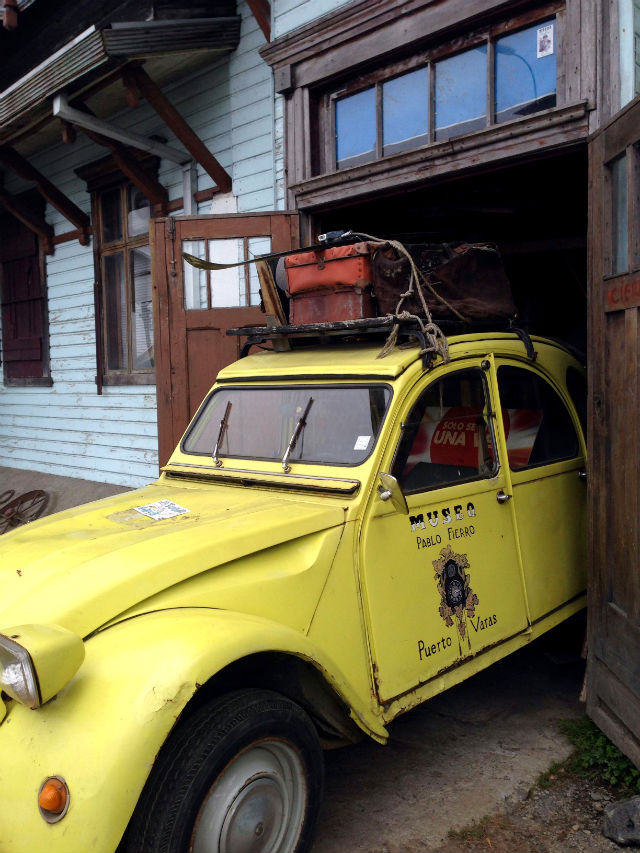
    Fact: Pablo Fierro is a local artist in Puerto Varas. That’s him on the right talking to some visitors from Santiago. Another fact: Peach-colored tights make people look half-naked at first glance. (Right? I did a double-take.)

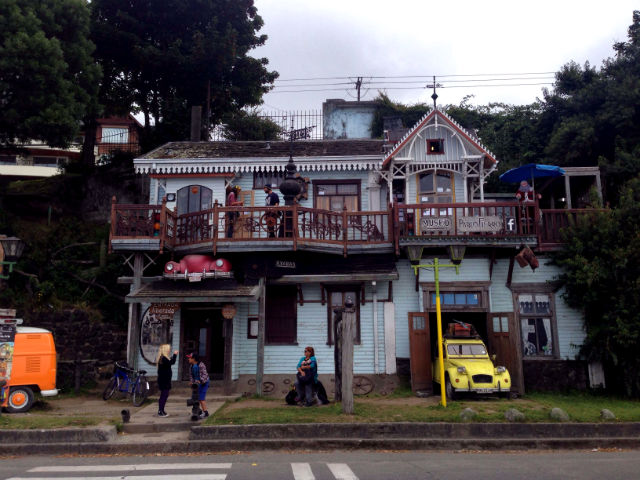
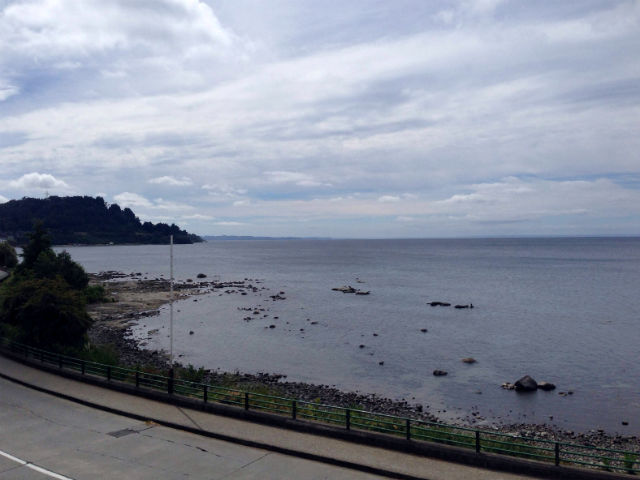
    OK, back on track. Here’s his museum in Puerto Varas, right on the edge of Lago Llanquihue. He doesn’t charge admission and just asks for donations.


    Pablo Fierro Museum 3


    Lago Llanquihue Puerto Varas


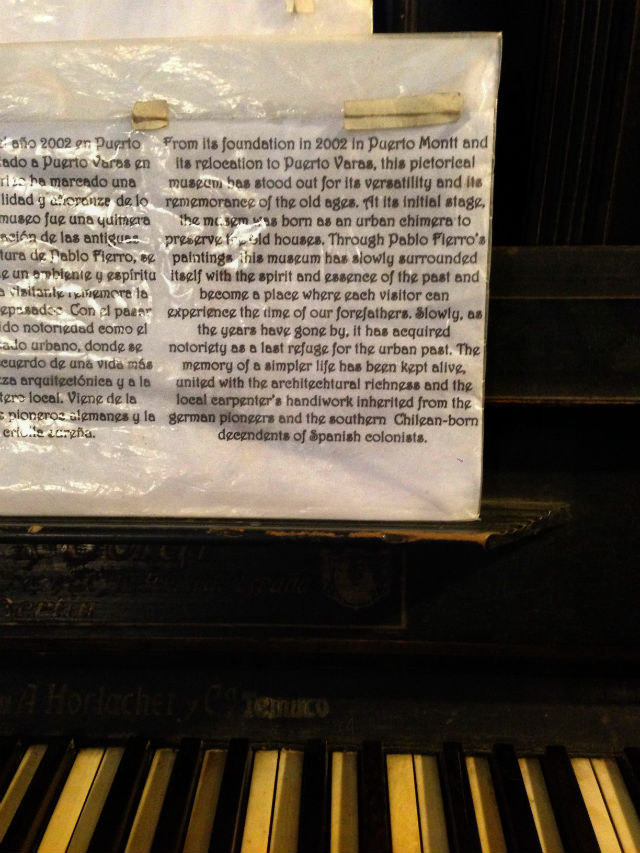
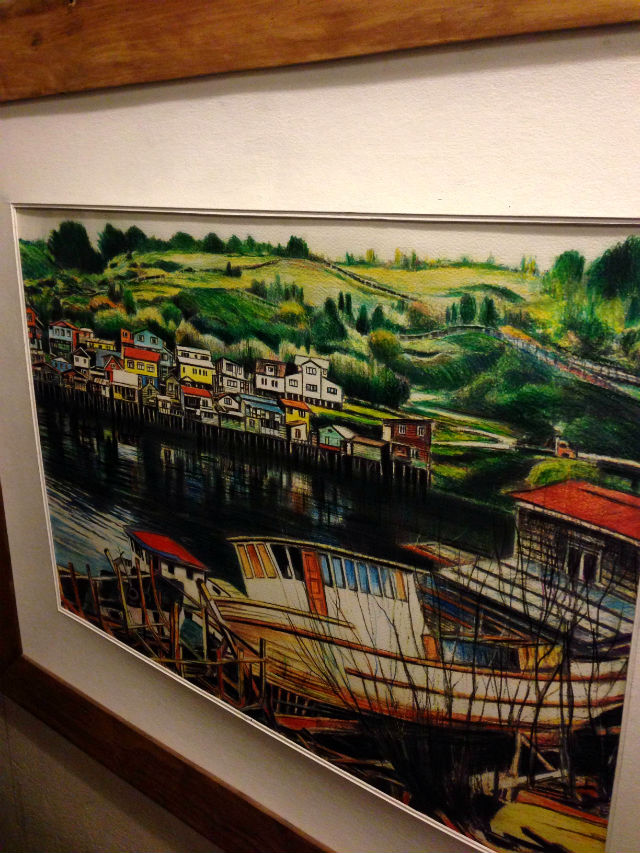
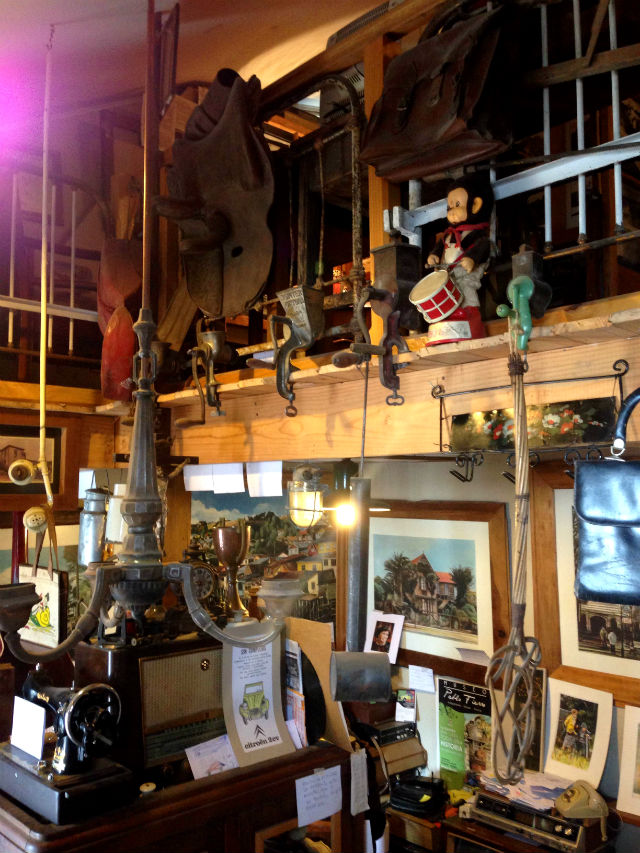
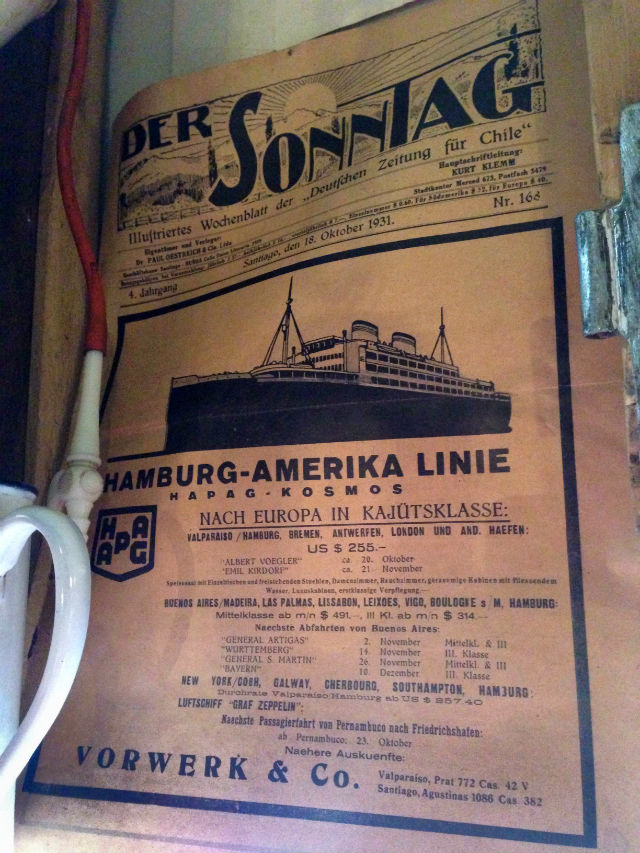
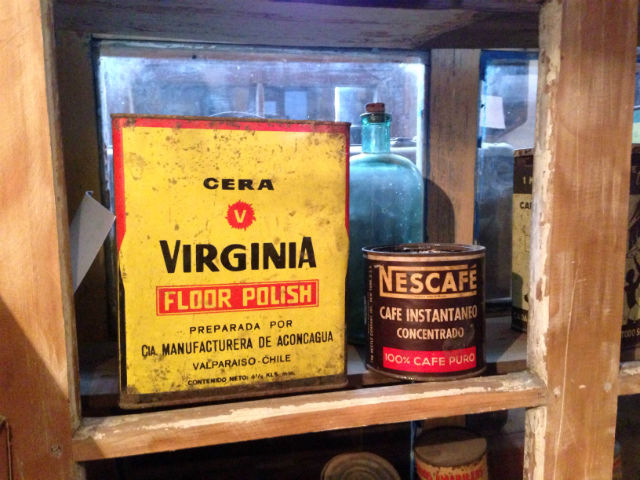
    The museum started in Puerto Montt, about 20 km away, until he bought an old house in Puerto Varas that he began to restore. Pablo paints local architecture and collects artifacts from the time of his forefathers, protecting the memory of a simpler life.


    Pablo Fierro Museum 1


    Pablo Fierro Museum 8


    He’s a friendly guy, and he took a moment to chat with us and tell us about the museum. In three more years, he says all of his renovations and additions to the house will be complete.

    He’s kept all sorts of random antiques that highlight the region’s past. One of the things I wish I thought to get a photo of were the hundreds of index cards with notes from visitors thanking him for preserving Puerto Varas’s history. He’s pasted them all over the museum, and upstairs there is a basket overflowing with even more.


    Pablo Fierro Museum 5


    Pablo Fierro Museum 6


    Pablo Fierro Museum 7


    Pablo Fierro Museum 2


    Tomorrow we say good-bye to Puerto Varas and head to Isla Lemuy, a tiny island off the large island of Chiloé. See you there!


  • 19Feb14

    19Feb14

    Holly loves road trips! Here she is in front of Lago Llanquihue and Volcán Osorno. For the Californians reading this, Lago Llanquihue is about twice the size of Lake Tahoe. It’s situated in northern Patagonia in the Lakes Region. If you look at a map, you’ll see there are a number of other very large lakes nearby. We’re staying in Puerto Varas, on the south end of the lake, which is near where our friend Eduardo from Viña del Mar was born.

    There is a very scenic drive all the way around Lago Llanquihue, so we decided to make a day of it. It’s very easy to navigate because there are green signs that keep you moving in the right direction at all times. And, if all else fails, drive towards the lake! Factoring in little detours and a stop to eat, it takes about five or six hours. But, we didn’t take the turn off to the national park since we’re saving that for another day, which would add a couple more hours.

    In some areas, the lake looks a lot like the ocean. We came across a number of spots where people were sunbathing and taking a dip in the waves. Here’s a more secluded spot we found near Las Cascadas.


    Lago Llanquihue Las Cascadas


    We stopped at a little house along the way that serves onces alemán, which translates to German “elevenses,” or high tea. We thought we were going to get a coffee and a small pastry. But noooo…


    Tante Valy


    Onces Aleman


    Onces Aleman 2


    We ended up with coffees, rolls, salame and cheese, jams, salmon, eggs, chicken, and a slice of kuchen AND cake for each person. Needless to say, we couldn’t eat it all. But don’t worry — the cakes are in the fridge for later.

    During our drive, we also made the decision not to go further south after our next stop in Chiloé. It was a tough decision, but this month of hopping all throughout Chile hasn’t been cheap and is, quite frankly, exhausting. Flights to Punta Arenas are expensive (and not very dog-friendly), and bus trips are long and difficult — 22 hours weaving through the mountains. We’re ready to find another place to stop for a good month or so, so we’re working on figuring that out. We’re thinking it might be time to cross over to Argentina.

    In the meantime, we’ll continue to enjoy the views here in Puerto Varas. Here are a few more from the drive, including a shot of our favorite backseat driver.


    Road by Lago Llanquihue


    Volcan Osorno


    Backseat Holly


  • 18Feb14

    18Feb14

    On this Travel Tip Tuesday, we said good-bye to Valdivia and are now in Puerto Varas, a lakeside town that feels like Lake Tahoe’s half-Chilean, half-German cousin. But we’ll introduce you to Puerto Varas another day.

    Today, our travel tip is essentially unpaid advertising for Airbnb. (Click here and we can both get a $25 credit!) It has been supremely helpful for our long-term travel needs for several reasons:

    • You get to meet local people
    • You feel like you’re “at home” instead of in a sterile hotel that could be anywhere
    • People are often more accommodating with Holly than hotels are
    • It’s often cheaper than a hotel but more comfy than a hostel
    • Airbnb handles the money and has protections for both guests and hosts

    We’ve had a variety of experiences, from very independent ones where we stayed in an apartment by ourselves to being treated like friends of the family. The family we stayed with in Valdivia invited us to have beers with their friends and colleagues, sat on the patio with us while we chatted with their kids, and took us for a beautiful drive where we saw sights in Valdivia we’d never have found ourselves. (Photo up top.) Here we are with our Chilean family-for-a-week.


    Chris Claudio


    Tamara Yeanette


    Last night, they took us to their favorite late night spot where we shared a pichanga. It’s like nachos, but with fries instead of chips.


    They were also the ones who helped us finally make our way to Niebla, which literally means “fog” in English, after we got off on the wrong bus stop the day before.


    Niebla


    We’ve had so many memorable experiences on this trip, but Valdivia was one of our favorite places because of the natural beauty and the people we stayed with. So, if you’re going on a short trip OR doing full-time travel like us, we highly recommend checking out Airbnb. To close us out, here are some things we’ve found helpful when using it.

    • Fill out your profile completely. This is especially important when you’re new to the site and don’t have reviews. People are letting you into their homes and want to know who you are.
    • Read reviews carefully. Someone might say they have laundry, internet, or some other amenity, but maybe it didn’t work or wasn’t available. Other reviewers will mention this.
    • Don’t be discouraged if it says “no pets” or similar things. I’ve written hosts notes explaining that we’re traveling with our dog and what they can expect from her, and no one has turned us down. In our stay outside Los Ángeles, the guesthouse owners watched Holly during the day while we went hiking, letting her play on the patio and tag along while they hung laundry out on the clothesline. It was so kind of them!
    • Send inquiries in the host’s native language. Even if you have to use Google Translate to help, people appreciate when you make an effort and don’t just assume everyone in the world speaks English.
    • Act like a house guest. In big chain hotels, you might just leave a towel on the floor in the bathroom, but you don’t do that when you’re a house guest. Act like you’re a house guest at your parents’ friend’s house and you’ll always get positive reviews.

    That’s all we’ve got for tonight. Hasta pronto.


  • 16Feb14

    16Feb14

    Travel is humbling. We took the #20 micro (a small public bus) today to Niebla, a small town west of Valdivia near the Pacific. Or so we thought.

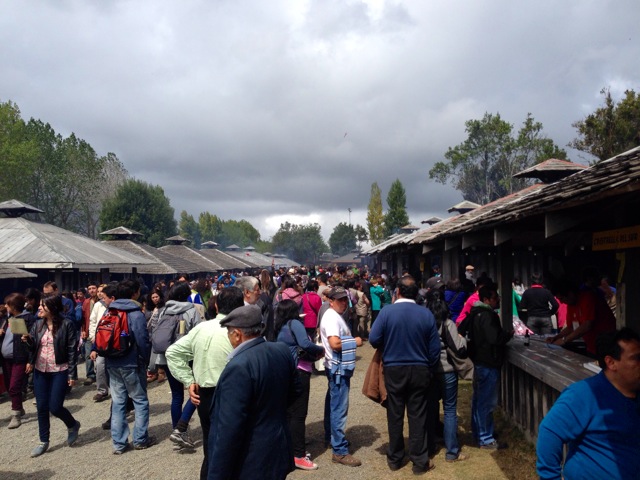
    We told the driver we were looking for the feria costumbrista, and when our stop came, he told us and we happily got off the bus. We ended up at this wonderful fair with food, music, and great people-watching. We saw the word “costumbrista” on some signs. And with the view (see above photo), we weren’t complaining.


    Feria Costumbrista Piojo


    Feria Costumbrista Piojo 2


    Anticucho


    When we got back, the family we’re staying with asked us about our day. The father, Claudio, asked me if we went into the ocean. I said, “No! It’s too far, but we saw the river.” He looked at me like I was crazy because he said the ocean was only six meters away. When I showed him the photos, he said, “Oh, you didn’t go to the feria costumbrista. Or you did, but in Piojo — not Niebla.”


    Piojo


    Shoot! Guess we’ll have to try again tomorrow. At least it was beautiful. Doesn’t Valdivia look like the Pacific Northwest? We’ll leave you with a couple photos from the boat tour on the river.


    Rivers in Valdivia


    Rivers in Valdivia 2


  • 15Feb14

    15Feb14

    Hemos llegado a Valdivia. Here’s Chris chillin’ before our bus ride, along with the nasty fire we saw in Temuco along the way.


    20140215-232435.jpg


    20140215-232506.jpg


    Someone told us today that most firefighters in Chile are volunteers. Wild!

    By far, Valdivia is one of the most beautiful cities we’ve been to in Chile. It’s so green, with several rivers crossing through it. It’s a major college town and is one of the cities with some German influence.


    Rio Calle Calle in Valdivia


    Our Airbnb host Yanette and her 14-year-old son picked us up at the bus station. We were originally going to stay in a room in their house, but their cottage is currently empty so we got an upgrade. She stocked the kitchen with bread, cheese, ham, jam, juice and cake for us. And she treats us like family.

    Today, her husband had to pagar el piso (literal translation is “pay the floor”) and she invited us to join them. Her husband explained that, in Chile, when you get a new job, it’s customary to invite your boss and his/her family over to your house and entertain them. They barbecued and drank beers, and we spoke Spanish with all of them for two straight hours. It was lots of fun, but a challenge because it requires a lot of focus in order to understand.

    They have three dogs, one of which is also age 15! Meet Lucas.


    20140215-232534.jpg


    We checked out the Feria Fluvial today, as well as just wandered around downtown. Tomorrow we’re going to hop on a boat and explore the river.


    Feria Fluvial in Valdivia, Chile


    20140215-231224.jpg


    20140215-230930.jpg