Blog

  • 08Jan14

    08Jan14

    We learned five new things about Chile today, so we thought we’d pass them on. They’re from an excellent free walking tour in Santiago that we highly recommend. The same company offers a walking tour in Valparaíso which we plan on checking out.

    Before I share, let me tell you what you’re seeing in the photo above. These two street dogs met up with our group across from the presidential palace about 20 minutes into the tour. They stayed with the group the whole time — nearly three hours. The guide said sometimes one of the dogs follows him home. The lighter one in the background went for a romp in the fountain after barking at random people passing by for no apparent reason.

    OK, here’s what we learned:

    The coffee shops where all the servers are women wearing short dresses? Those aren’t a coincidence! Remember how we went to this stand-up espresso bar where the women wear ultra-short, ultra-tight dresses and it’s mostly male patrons? Chris was convinced they’re the Chilean version of Hooters…and he was right. They are referred to as café con piernas or “coffee with legs.” Some of the racier ones have blacked out windows.

    The native people are actively uprising. The Mapuche are the original, pre-Spanish inhabitants of Chile. They are still 10 percent of the Chilean population — and there are areas in southern, rural areas where Mapuche are still in active conflict with Chile.

    A law was recently passed to penalize people for abandoning dogs. There are a lot of street dogs in Santiago, but they are relatively clean, well-fed, and many are neutered. People in the neighborhoods take care of them. They’re everyone’s dogs. Still, they are trying to reduce the amount of animal abandonment.

    We knew Chile had been under a dictatorship, but we didn’t fully understand the details. And it’s wild to think that it was still going on during our (early) lifetimes. In any case, the 1973 coup ultimately came down to: “the economy, stupid.”

    Chile is still rebuilding after a massive earthquake four years ago. There were still a few large buildings undergoing final reconstruction efforts after a massive 8.8 earthquake in 2010.

    Now you’re ready to play Jeopardy.


  • 07Jan14

    07Jan14

    This installment of Travel Tip Tuesday is about technology and what to bring with you when you are traveling. One of the questions we hear often is, “Oh, did you bring iPads?”

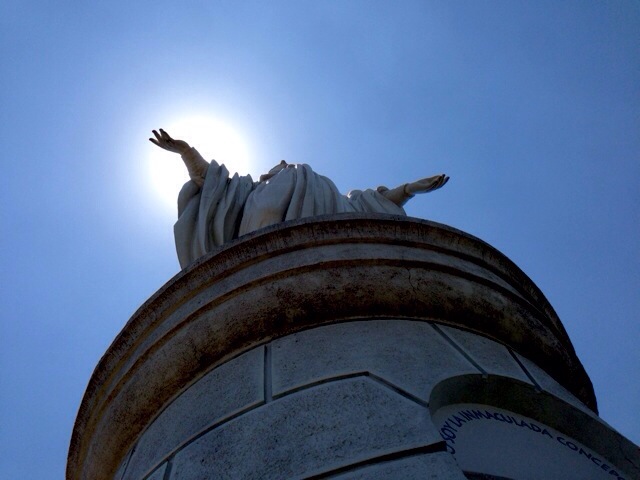
    We thought carefully about what technology we really needed, so here’s a little about our thought process. Ultimately, we went with our laptops and iPhones to cover all our needs. We have a small digital camera that we bring when we’re going somewhere really picturesque. But the iPhone can still take pretty good photos, like this one of the Virgin Mary overlooking Santiago.


    20140107-173201.jpg


    Questions to Ask Yourself

    • How long am I traveling? Is this a short- or long-term solution?
    • Am I primarily consuming media, or will I be doing productivity-related things, like word processing or video editing?
    • Which one or two devices take care of all my needs? How can I ditch duplicative devices?

    Laptop or Tablet?
    We’ve gone on trips where we only brought a tablet, and it was fine for checking the occasional email, looking up information, or watching a movie. The upside, of course, is that even with a keyboard, a tablet is much more compact and lightweight than a laptop.

    For our purposes, we couldn’t imagine only having tablets for a year. We knew we’d be working on projects where it would be easier to use a laptop, such as the videos I created for my Skillshare class. And while a laptop is bigger, a tablet is still too big to keep in your pocket, so it doesn’t make it easier to transport on a daily basis. Also, some mobile apps, such as the WordPress mobile interface, lack a lot of the functionality of the desktop version. Believe me, we tried it.

    Lastly, some mobile apps only allow you to access things while connected to the internet. That’s fine if you’re someplace with wifi, but if you don’t have cellular data — which you won’t if you’re abroad and don’t have an unlocked device — then it’s super annoying. For example, want to remove photos from your memory card to make room? You could upload them to the cloud…if you have good wifi. Better to have the flexibility to transfer them to your laptop using a cable while offline.

    Bring the Smartphone?
    Even if you have a dumbphone and love it, I’d recommend getting an unlocked smartphone. We have iPhone 5’s, which serve as phones, GPS, e-readers, MP3 players, cameras, video recorders… Why am I saying this? You already know that these can do everything. Best of all, you can grab a cheap SIM card and get prepaid minutes and, if you like, cellular data.

    The SIM cards we’ve gotten are less than USD$10 and come preloaded with some minutes, texts and data. It takes 15 minutes at a store to buy, install and activate. And then you have something you can keep in your pocket day-to-day rather than carrying a bag. Going for a run? It’s got your music. Lost? It’s got maps and GPS. Find a nice park? Grab a bench and read your book. At a coffee shop? Do a Skype video call over wifi.

    Moral of the Story
    Don’t bother with a tablet unless you’ll only be gone for a long weekend. We sold our iPad and it paid for some plane tickets.

  • 06Jan14

    06Jan14

    The deliciousness above is a calzón roto, which tastes a little like a chewy donut and is finished with powdered sugar. Notice the artful twist? The perfect accompaniment to your Nescafé.

    Other baked goods common in Chile are empanadas de pino, filled with ground beef, hard-boiled egg and an olive. There are delicious sandwich rolls that also have a good chew, as well as these small croissants with a sweet glaze called medias lunas.

    I’ve been getting back into beef-eating because there’s a LOT of beef here. Many of the typical Chilean dishes have beef and potatoes. Chris is in heaven.


    20140106-155746.jpg


    We visited an exhibit that had salt all over the ground, which made us think we should probably go to Bolivia. It was about urban planning in Santiago in order to reduce economic inequality. One of the strategies is to connect all the disparate neighborhoods with free, open, green spaces. It reminded me of that New York Times story about how upward mobility is most possible when communities have a mix of income levels, and how it’s least possible when rich and poor are segregated.

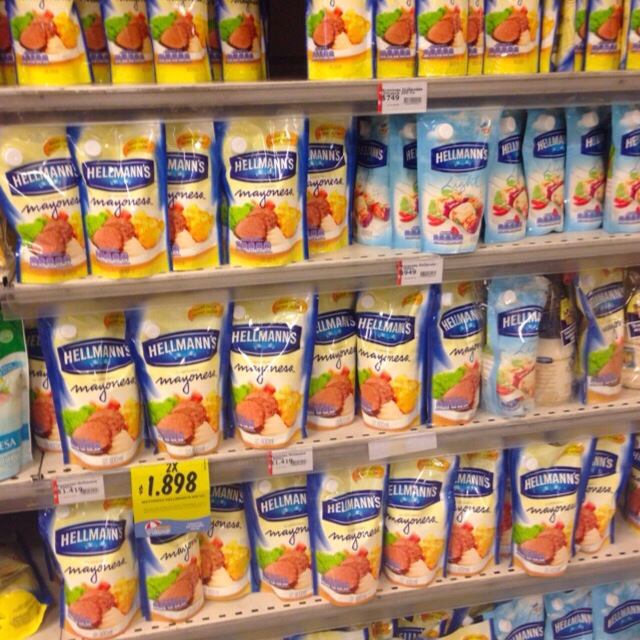
    One of our favorite things to do in new cities is visit the markets and grocery stores. It’s fun to take in the little differences and see what people buy and eat. One thing we saw at the grocery store is yogurt in bags, kind of like what frozen peas come in. The other thing? Mayo in bags. Mmmm…


    20140106-155811.jpg


  • 05Jan14

    05Jan14

    It is nice being in a new city and being able to play tourist. Check out these flying dogs!

    Yesterday, I had a great conversation with a friend Carolyn and her boyfriend who are doing a leap year of their own — which they have dubbed World Tour 2014. (Way to go!) It was an exhilarating conversation both because I love being able to help people, but I was also reminded of how Chris and I felt when planning for our leap year: excited, terrified, and excited.

    I just read this article about the four Ps that lead to happiness: purpose, perspective, people and play. And it felt great knowing that what we are doing is helping in each of these categories.

    Our purpose is to get outside our comfort zone and think differently about what we value. Every time we are out of our element but manage to get comfortable, it feels like an accomplishment.

    Travel is one of the best ways to gain perspective, and I found myself smiling when thinking about some of Carolyn´s questions about full-time travel — the same concerns I had before we left, like putting a career on hold and what to do with our stuff — and realizing that I now have a different perspective on those issues.

    Chris and I are getting lots of quality time with our favorite people, each other. The distance forces us to be mindful about keeping in touch with others. If you can believe it, we probably keep in touch with family and friends more now than we did when we were in San Francisco.

    And play just goes without saying: we are relaxing, trying new things, exploring new places.

    Of course, you do not have to travel for a year to fill your life with the four Ps. Although, it´s probably the funnest way. 🙂 Did I mention that we have a page specifically dedicated to travel inspiration?

    I leave you with this room of people working to gain perspective through art.


    Museo Bellas Artes Santiago


  • 04Jan14

    04Jan14

    We made it to the cheese zone… I mean, Chile! This photo is from the cheese section of the market a couple blocks from our apartment.

    It’s summer here and roughly 80 degrees in Santiago. We stick out like sore thumbs — Chris because he’s clearly Caucasian and me because my clothing is 100 times less sexy than every other woman’s. Holly is less than pleased about being back in hot weather, but we’re happy campers. We’ll be here for a few more days before heading to Valparaíso and Viña del Mar.


    20140104-201054.jpg


    We’ve been wandering the streets to see the sights, eat good food, and run little errands — like getting power adapters and SIM cards. One of the things that’s exciting and humbling about travel is how getting things done is totally different. Fortunately, people are friendly and willing to help — and there are plenty of places to take a break and enjoy tasty meat sandwiches.


    20140104-201132.jpg


    20140104-201146.jpg


    Chileans love Nescafe, which is what you’ll find at most places. While it’s not bad, Chris and I were hankering for some espresso. We found this espresso bar, with an actual stand-up bar, that we’ve now been to twice. Most of the staff is women, and they all wear super-tight, super-short dresses. The only female patrons I’ve noticed are also other tourists. So maybe I’m missing something here? Chris thinks so.


    20140104-201118.jpg


    We’ve already been drinking plenty of wine and are excited to see more sights tomorrow! If you have any Santiago recommendations, will you please let us know?


    20140104-201105.jpg

  • 01Jan14

    01Jan14

    ¡Feliz año nuevo! Tomorrow, we fly to Santiago.

    To bid adios to the first country in our leap year, we said farewell with tacos al pastor. Also, our Airbnb host Rodrigo stopped by with a gift of tequila and mezcal.

    We’ll spend one week in Santiago before hopping on a bus to Viña del Mar, just north of Valparaíso. Our plan is to stay for a month, and from there we’re considering renting a car and visiting places up and down Chile. It’s summer there now, so the weather will be in the mid to high 80s.

    Silver Linings Playbook and Step Brothers are queued up on our laptops, and we’ve got books downloaded onto our phones. And Holly’s got her calming treats. This is going to be a long flight for her, so we’ll see how it goes… Our flight stops over in Panama for an hour and a half, and we’ll arrive in Santiago at 5:45am local time.

    See you then!

  • 31Dec13

    31Dec13

    Announcing: Travel Tip Tuesdays!

    We thought we’d start a new tradition for the new year with a new travel tip every Tuesday. Now that we’re pros at being full-time travelers, we wanted to share the love and hopefully inspire you to do some traveling yourself!

    This week’s tip: what to do with your passport and other important documentation while traveling.

    Why does this matter? Because your passport proves your citizenship, shows when you entered a country, and is required for going home. If you lose your passport, it’s not the end of the world, but it’s a costly and bureaucratic process to get your passport replaced while abroad. It’s also a hassle if you lose other important documents, like vaccination records if you’re entering countries requiring you show proof of vaccination, or visa-related documents provided on entry.

    How do we protect our documents?

    1. Take photos. We took color photos of our passport data pages and other important documents before we left. You could scan them or use a copy machine — whatever. I recommend making one paper copy of each document.

    2. Don’t carry originals with you unless you’re actually using them that day. There are two schools of thought on this. Some say you should keep your passport on your person at all times, preferably in something secure under your clothes. I think that’s absolutely ridiculous, and don’t even get me started on things like money belts.

    While the odds of getting robbed are low, pickpocketing isn’t unheard of — as is stuff falling out of pockets or backpacks. Instead, keep the photocopy of your passport data page with you and leave the original where you’re staying. If you’re worried about staff entering your room and taking your stuff, don’t be — most people are honest. I left cash sitting out before. You can use a safe in your room if you want, but we just keep them somewhere out of sight.

    3. Save a copy in your email. We emailed copies of our documents to ourselves. That way, we’ll have copies in the cloud that we can access from anywhere if needed. You can also email a copy to relatives just in case. (We didn’t do that, though.)

    4. Pack a USB stick. Lastly, since we’ll be gone a while and really want to play it safe, we saved electronic copies of everything on a tiny USB stick. You can easily keep it on your person, or keep it tucked somewhere in your luggage like we do. That way, we can hit up an internet cafe or something to print copies if we’ve lost everything.

    Of course, all of these methods (except saving a copy in your email) are useless if you keep everything packed together! For example, Chris and I keep our originals on us while we’re flying and keep the copies in our backpacks that we check in.

    This is not a veiled warning about theft; it’s more likely that these would get misplaced than stolen. And if someone was going to steal something, it’s more likely to be the iPhone you’re messing around with on the metro! These methods will help you make sure you have backups of your passport or other important documentation if you need them.

    HAPPY NEW YEAR! Hope it’s filled with travel adventures.

  • 30Dec13

    30Dec13

    Have I mentioned that it’s stressful to bring pets across international borders? Well, it is. Today we got (almost) all the documentation we needed to bring Holly from Mexico to Chile. I say almost because we still have one more step.

    For the sake of posterity and any other person who wants to travel with their dog, here’s how to get a pet export certificate or pet health certificate in Mexico. One day I’ll write up how we got one in the U.S. too.

    / BACKGROUND / Any time you are traveling with your pet internationally — versus traveling domestically — there are special requirements. Each country has its own requirements, which may vary based on the country you’re originating from. However, most countries require some kind of official “health certificate” or “export certificate” from a government agency.

    / GETTING STARTED: WHICH AGENCIES WILL I DEAL WITH? / The first thing you should do is determine the name of the government agency you’ll be dealing with in both your country of origin and destination country. It’s usually the equivalent of the USDA, because the whole point of restricting animal importation is to protect a country’s food and livestock from harmful diseases.

    • In Mexico, the agency is SAGARPA, which is the Department of Agriculture, Livestock, Rural Development, Fisheries and Food. It has a sub-department that you will deal with primarily called SENASICA, which is the National Agro-Food Health, Safety and Quality Service.
    • In Chile, the agency is SAG, which is the Agriculture and Livestock Service.

    If you’re having trouble figuring out the agency at your destination, I recommend calling the consulate of your destination country. They may be able to offer you additional guidance, but do not trust consular workers to be up-to-date on pet travel requirements. You should get those directly from the agency. For your country of origin, just ask a local vet.

    / FIND YOUR DESTINATION COUNTRY’S REQUIREMENTS / Once you know the appropriate agency in the destination country, browse their website to find out what they specifically require. Here are the requirements to bring a dog to Chile, as of today:

    • A health certificate, in Spanish, issued by the official health authority of the country of origin that is no older than 10 calendar days.
    • The certificate must show that the pet:
      • Underwent a clinical exam by a veterinarian 10 days prior to shipment and was recognized as free of communicable and parasitic infections
      • Was vaccinated against rabies at least one month but less than 12 months prior to shipment (or was tested for rabies antibodies 3-24 months before the trip)
      • Received an internal and external antiparasitic treatment within 30 days prior to shipment, including naming the active ingredient, dosage and application date
    • The certificate must also include the name of the owner, additional background on any treatments the pet received, and the address where you will stay in Chile.
    • There is no cost to import pets.

    Be on the lookout for any special requirements for your country of origin. For example, some requirements may be more strict if you’re coming from a country that has different infectious diseases. Or, if you’re coming from a country close by, requirements might be more lax.

    Some countries, or smaller airports, may only have inspectors on hand on certain days or during certain hours. Sure, immigration and customs might be open, but there is usually a special inspector who deals specifically with animals. Since we were considering booking a flight to Santiago that arrives at 5:40am, I contacted SAG to make sure they would have inspectors on hand.

    / FIND YOUR ORIGIN COUNTRY’S PROCEDURE / Local vets are a good resource here. They may not know everything, but they can help point you in the right direction. For example, notice how Chile says “health certificate?” Well, the vet here in Mexico told us that SAGARPA/SENASICA call it an “export certificate,” or certificado de exportación.

    Unlike in the U.S., run-of-the-mill vets in Mexico don’t have access to official government forms. Rather, vets help you with your documentation, and then you pay a visit to SAGARPA/SENASICA in person with your documents to obtain your certificate. In Mexico City, that means going to the SENASICA public service window at the airport. I called their office to find out what they needed and confirmed that we only needed to bring our paperwork — not the dog. They will need to see the dog eventually though; more on that later.

    / PLAN AHEAD, BUT NOT TOO FAR AHEAD / So, you probably noticed based on Chile’s requirements that you can’t do this on a whim. Same with most countries: you typically have to have most vaccinations complete a minimum of 30 days before you leave. So make sure you get all the vaccinations you need ahead of time. Why? Like in humans, it takes a little while for vaccines to take effect in animals.

    However, don’t be too much of an early bird. Some paperwork has a firm expiration date. For example, a health certificate from a vet in Mexico is only good for five calendar days, meaning SAGARPA/SENASICA won’t give you your export certificate if the paperwork from your vet is expired. And the export certificate you obtain from SAGARPA/SENASICA can only be a maximum of 10 days old when you arrive in Chile. So, plan accordingly when scheduling vet visits and going to get your export certificate. Why the last-minute nature? An animal’s health can change quickly and there has to be a set window in which health results are considered valid.

    / TAKE YOUR DOG TO THE VET / When taking your dog to the vet to get their health certificate, DO NOT assume your vet will know a) what you need in order to get your export certificate in your origin country, or b) what your destination country’s requirements are. If you just ask them for a health certificate, they give the dog a brief physical exam and write up something on their letterhead saying the dog is healthy and disease-free, as well as confirm basic characteristics such as age, color, breed, weight, etc. That’s fine, but insufficient.

    Instead, bring your destination country’s requirements with you! For example, our vet gave us documentation specifically noting that Holly is free of parasites and that she has received internal and external antiparasitic treatment. We had to go back a second time for the latter, since we thought it would be sufficient to bring the pills with us to SAGARPA/SENASICA. Do not make this mistake. Unless it’s signed by a vet, government agencies won’t accept it. Lastly, we already had documentation from our vet in the U.S. of her rabies and other vaccinations.

    Depending on what the vet has to do, you can expect the exam and health certificate to cost approximately 300 pesos.

    / PAY A VISIT TO SAGARPA/SENASICA / Armed with our documentation, we took the metro to the airport. We ended up having to make two trips because we were missing the internal and external antiparasitic treatment documentation I mentioned above. On our second trip, we almost got sent away again because it was the last day our vet’s health certificate was valid and our trip isn’t for another couple days. It took a combination of pleading and assertiveness to get them to understand that, while the health certificate from our vet would be expired in Mexico before our trip, the exportation certificate would still be valid in Mexico and both would be valid in Chile.

    Then, there was some difficulty which our vaccination documentation because it was in English and not on a “carnet de salud,” or health card, which is what vets traditionally provide in Mexico. Basically, it’s a booklet with a pet’s vaccination and health records all in one place. Our documentation was in the form of an invoice from our vet, which listed the vaccinations received, the dates, Holly’s patient information, the cost, and included the vet’s signature.

    But the man told me that the information needed to be in a carnet de salud and that he could not accept this, even though it specifically said Holly got a rabies vaccination on September 7. I pointed this out to him and he told me that it didn’t have the signature of the vet who gave us our health certificate. I pointed to the signature from the vet in the U.S. who gave the vaccination. He finally acquiesced. Remember, bureaucracies are the same all around the world. Be patient and assertive.

    We handed over copies of all of our documentation and walked away with our export certificate. We celebrated with coffee and Cinnabon at the airport. We just have to bring Holly in person before our flight — so we have to arrive even earlier — for a final check and another signature on the certificate before we can leave.

    The flyer on the wall said that export certificates cost 421 pesos, but we were not charged anything. However, it’s possible we’ll have to pay that when we come back for the second signature.

    / OTHER TIPS / Here are a few additional tips:

    • It really helps to know some Spanish. My Spanish has improved wildly since being in Mexico, and I was able to have fairly complex conversations with both vets and government officials, in person and by phone. If your Spanish isn’t that good, make sure to ask people to speak slowly and repeat back what you think you heard them say to make sure there are no miscommunications.
    • Make copies. Make two or three copies of all your documentation, and never give away your originals. Do not expect government agencies to make copies for you — they will send you somewhere where you can pay to make them yourself.
    • Don’t assume. It’s up to you to know what the requirements are and make sure you have what you need. Ask lots of questions. Tell people exactly what you’re going to do and ask them if they see any problems; don’t expect them to offer the information proactively.
    • Check your airline’s requirements too. Chances are, if you’re meeting your destination country’s requirements, you’ll be fine with your airline. But check with them too in case they have any special requirements before allowing you and your pet to board.
    • Be your own advocate. If you’re not getting what you need, show documentation and ask again. If you’re not confident you’re getting the right information, get a second opinion. You have to be assertive!

    Oh, the things we do for this girl. We love you, Holly.

  • 29Dec13

    29Dec13

    One of the best things about Mexico City is the food. And as I mentioned in previous posts, you can get great food for cheap while traveling full time.

    In fact, some of the best food we’ve had has come from small, no-name places around the neighborhood rather than big restaurants.

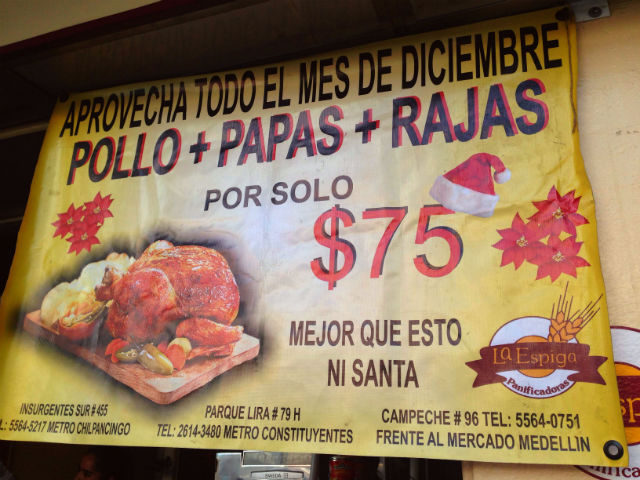
    Take this bakery across from Mercado Medellin called La Espiga. Not only do they make fresh and delicious breads and pan dulce (pictured above), but they also have these amazing rotisserie chickens that you can buy for super cheap.


    Buying chicken in Mexico City


    We didn’t find it in a guidebook; we found it just walking around. Walk a few doors down and you can get a quarter kilo of tortillas for 3 pesos. Walk across the street and you can get quesadillas or tortas or tlacoyos.

    Chris recently read an article about the best food cities in the world, and here’s what one writer said about food in Mexico City:

    Mexico City and Tokyo are still my favorite dining destinations. Both cities are endless urban sprawls of street food interspersed with great restaurants. The bar is set very high in these cities, as food is fundamental to both Japanese and Mexican cultures. There is an emphasis on simplicity and depth of flavor rather than novelty or style. Competition is fierce, so restaurants and vendors that don’t serve great food are quickly replaced. Both of these cultures truly respect food as a lifelong craft. The taquero shaving pork off the rotating spit in Mexico City has probably been doing it for decades, as has the ramen chef in the streets of Tokyo.

    Anyway, we should probably work on an article about how not to get fat while traveling. If you have any advice for us, let us know. 🙂

  • 28Dec13

    28Dec13

    We went full-on tourist and followed some Lonely Planet recommendations. The main event was Plaza Garibaldi, where mariachi bands roam and which Lonely Planet describes as “notoriously seedy” but is also the recipient of “a recent makeover.” They also call it one of their top choices when visiting Mexico City, so we decided to make a night of it.

    Here’s a quick video so you can take it in:


    It’s a couple blocks away from the Garibaldi metro station and near a big food mercado, which is where we decided to have dinner. It’s a long hallway with probably 20-25 small restaurants that all looked good. We picked one and some other gringos saw us and decided to follow suit. If they only knew, we have no idea what we’re doing either.

    All around the plaza there are restaurants and bars too, although I suspect they’re expensive. That’s also where the Museum of Tequila and Mezcal is — and it’s open very late — but we couldn’t bring ourselves to do it and preferred to just have a seat in the plaza.

    Anyhow, we got wrangled into buying a few songs, and I even got a dance with the guitarist. If we could do it again, we would have been firmer about the number of songs — they’re not cheap! 80 pesos each — but there were six guys and when are we ever going to do this again.

    Keeping with the tourist theme, we ate at El Hidalguense for lunch where we saw many other gringos. We saw more gringos today than during our entire month here! The food was good — they’re known for their barbacoa. But the real highlight was I got a much better recording of my favorite amplified announcer woman as the truck drove by the restaurant.


    We’ll miss hearing her voice!